
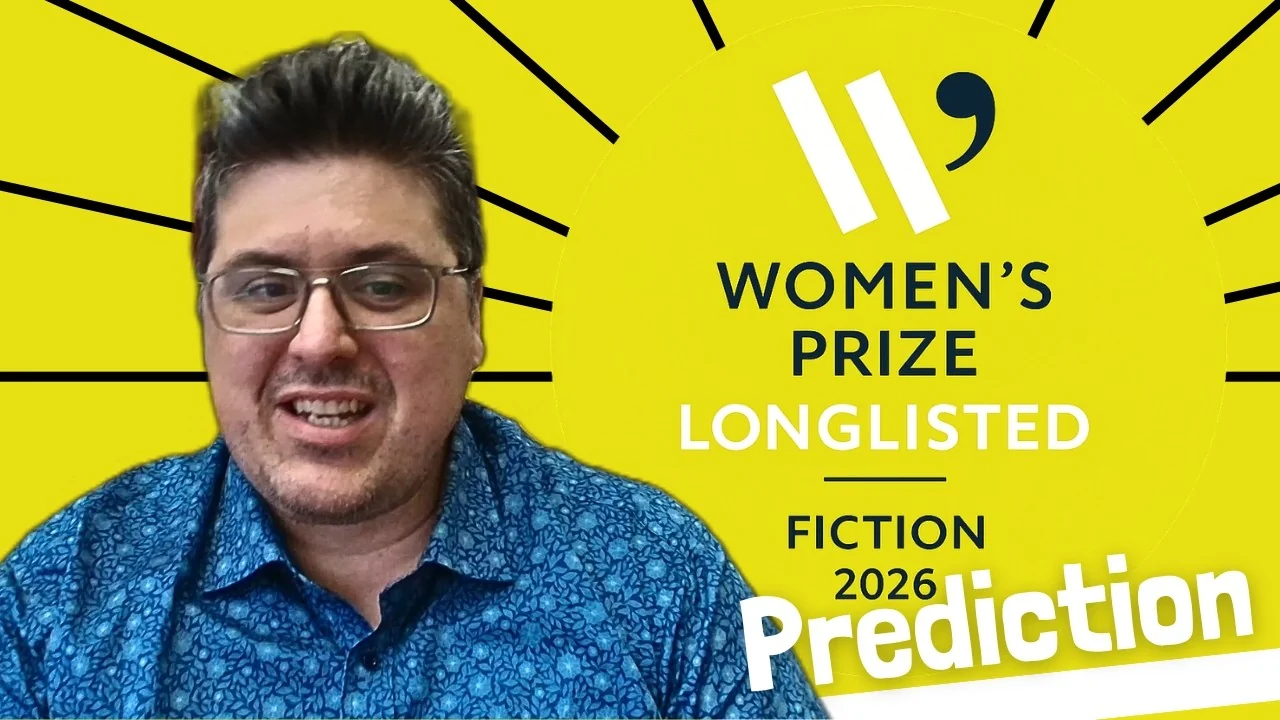

Watch Scott’s video on YouTube ↗
I’m going to review every book on the Women’s Prize longlist. Tell you what’s good, what’s bad, what might make the shortlist and what might win.
Some creators would do a tier ranking, which I think is really cliche and boring. I instead am breaking them up into 5 categories, not tiers - and review the books in each category one at a time leading to my Potential Winners tier, I mean category.
My categories are WHY? But said with pain and discomfort. Why? But asked as a legitimate non-rhetorical question. Perfectly adequate book, made of words that are on paper. Mmmmmm, Books. And WOW! Potential Winners.
Seeing as a lot of you like to laugh at my pain, I’m going to reward you straight off the bat and start with Why, but said with pain and discomfort.
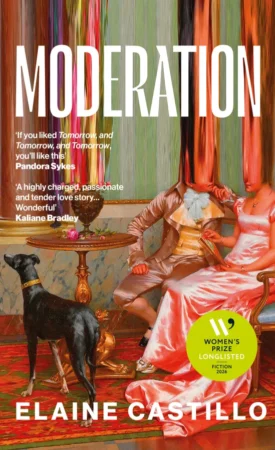
Moderation
Elaine Castillo
I’m never sure why the women’s prize insists on including a science fiction novel in the longlist. They only seem to be capable of putting on the longlist absolute dumpster fires of novels. Did I mention that these reviews were completely objective? Yeah, I mentioned that in my disclaimer.
Girlie is a content moderator, she may be the greatest content moderator in the world. Which is kind of like me claiming I’m the greatest at sitting on a chair in the world. I may have a rare talent for it, but there’s a lot of chair sitters out there.
Girlie deals with people posting all sorts of horrible content. The opening scene shows Girlie is justifying the removal of a video because a child was being raped, something that might have been hard to tell due to camera angles, faces not appearing in the film and basically there was an argument that it could have been consensual sex between two adults, one of them a very skinny and small woman.
The purpose of this scene is to show you Girlie is incapable of feeling any emotions, but makes very quick observations and decisions… This did seem a little like, hey what’s the worst thing you can think of, I want to drop a shocking opening scene. Nonetheless, I was excited to read about the way we’re over exposed and desensitised to the horrible events in the world… I can see how a little cringe is required to make some very hard hitting and horrible points. Unfortunately this is the high point of the book, and I should have given up then.
The company Girlie works for has invented some kind of online virtual reality experience, which requires content moderators - but it’s a new technology and everybody is figuring things out. From there it was like Elaine Castillo was offered a 90% off sale at the plotlines and tropes store and decided to go ham. Can we have a romance that achieves nothing, how about a heist? We have an evil company, how shocking. Plot twist, Girlie does have feelings. None of those things are bad in themselves, but pick something. Girlie is a Filipino American living with her family.
There are so many themes that COULD have been discussed and explored in this novel. This is a book that lends itself to exploring communication in online environments, deindividualisation, privacy, capitalism, how a society navigates human concerns when new technologies are developed, employee relationships, the differences between American and Filipino cultures and how that impacts the next generations… Unfortunately, all you get is lip service to these themes. They’re there, but only in the way you’re there at work on a Monday morning without coffee.
These reviews are intended to be thematic analysis and discussion, and this is a book that makes that really difficult. The opening has the potential to be reworked into a reasonable short story, but the rest of the novel has all the focus of the vision of an octogenarian who requires cataract surgery. I can’t really tell you what this book is about. This is a plot focused book where the plot has no focus.
I love a genre blending book, but this doesn’t really have enough science in it to be science fiction, it’s not literary enough to be literary fiction, the romance is a side plot so it’s not romance, what is this book?
A very wise woman once said “Before you leave the house, look in the mirror and take one thing off.” I believe that was Dita Von Teese. And I wanted to echo that about this book, and say get rid of the romance! Honestly, this book needs to kill the romance, but like tomatoes in a fruit salad, it’s doing two things, distracting you from the fact that there’s also eggplant in there, and bulking up the contents so the bowl is full.
I don’t have a problem with sci-fi being included on the women’s prize longlist - but I do have a problem with books that just don’t have the execution, craft or vision of a considerable number of better books out there. If a book isn’t good enough, why include it? In a world where there are so many quality science fiction and speculative novels, why put the substandard ones on the longlist?
Badly written, a complete mess and I just can’t see what it’s trying to do.
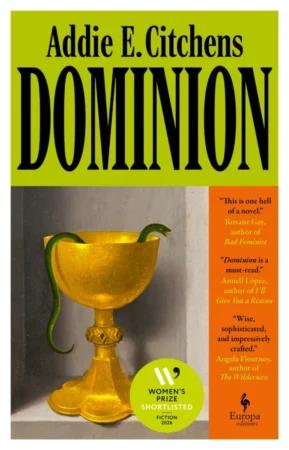
Dominion
Addie E. Citchens
I DNFed this book, then I said to myself. Nah, you can finish this, it might get better… It didn’t. To be fair to this book, I think there’s a good novel in this book, but it is obscured by too many characters, and not strong enough character writing. I think this is a novel where small errors make a big difference to the final reading experience, simplify, slow down and really get into the head of these characters and this is a 5 star read… But it didn’t do that.
Priscilla is the wife of the Reverend Sabre Winfrey Jr. Mother of five sons who are now young men, and lives a very privileged life, she is also somebody who ignores her husband’s wanderings. Her son Emmanuel or Wonderboy or sometimes just Wonder, please pick a name and stick to it, is tempted by young girls, particularly Diamond, an orphan who is looked after by Maggie. Wonderboy and Diamond look to hide what they’ve done, will Priscilla treat her son’s indiscretions like she treats his father’s?
At 240 pages that’s really all the book has space to be. But there is too much going on underneath, discussing power within the community. This is what I mean by small changes, big impact, because these are the sort of supportive stories that strengthen themes, that provide the similarities and differences that are key to the analysis… But they either need to be cut so that we can better see the main characters or the 240 pages need to be extended to around the 350 mark.
While Moderation was a novel where all the plot work obscured the themes, Dominion is a novel where all of the thematic work obscures the plot and more to the point, the characters.
Why? But asked as a legitimate non-rhetorical question.
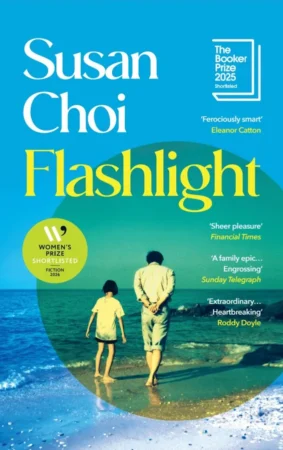
Flashlight
Susan Choi
I reviewed this when it was longlisted for the Booker last year, and my opinion hasn't changed. Initially I was loving this book, but it just kept going and going and really lacked focus. 464 pages that felt like 700.
A girl, Louisa, goes out with her Dad, then her memory fails and she wakes up on a beach at night with a flashlight. He's disappeared.
This is a family saga jumping between Korea, Japan and the US across multiple timelines. Serk, the missing father, was raised in Japanese-occupied Korea and felt more Japanese than Korean, he couldn't read Korean, used a Japanese name, and felt out of place when Korea was liberated after WW2. There's an interesting conversation here around identity, suppression, and the power of language, but it's under-explored, a real sin in a novel this long.
Anna, Louisa's mother, is our third major character. Large chunks are from her point of view, but they’re all after the flashlight incident, while Serk's sections are predominantly his childhood. This creates a disconnect and Louisa becomes a side character in her own story.
What starts as a family saga intermittently becomes a spy mystery novel, and it was poorly done, I wasn't convinced. It took me out of the story. It's like hiring a personal chef to cook a romantic 3 course dinner and then before the mains asking them to be the DJ for the evening.
My biggest frustration is the visibility of the mechanism Susan Choi is using. Serk's confusion about being Japanese or Korean isn't there to build him as a character, but rather to force the plot. Anna being disabled feels similar, an element needed to force an unlikely friendship. And Tobias, Anna's son, was never really part of the family and never really part of the book, although he took up a lot of pages. He should have been cut entirely.
Thematically this lacks focus. The setting struggles too, it is set in 3 countries, and a major theme is people living in countries they weren't born in, it feels wrong that the setting is completely unworked.
A poorly constructed, disjointed novel whose only saving grace is that it had potential to be better.
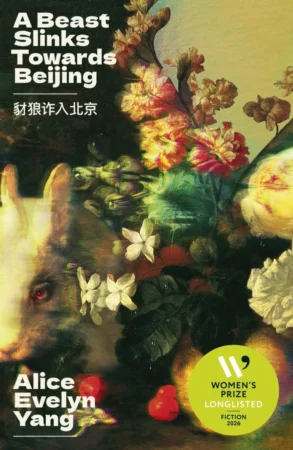
A Beast Slinks Towards Beijing
Alice Evelyn Yang
Qainze’s father left when she was 14, she’s now 25 and he has returned, but he’s a different Ba to before, older, broken, dealing with the trauma of living through China revolution and Japanese occupation.
Let me say that I think that’s an interesting premise for a book, there’s lots of potential in that description. Qainze sees a jackalop and a nine tailed fox, and yeah that’s weird, I always question the necessity of magical realism; the one place I like it is when we are questioning mental illness. It very much works to put me in the doubt of the characters who don’t trust their senses. The problem is that it is Ba, Qainze’s father who is mentally unwell, yes this is a book about generational trauma and Qainze is not in the healthiest mental state herself, but she’s not suffering from psychosis. So using the Jackalope to represent the destructive nature of intergenerational trauma is clunky, that it is just sort of there, like a magical realist appendix to the novel is also clunky. The 9 tailed fox represents unresolved grief and the fluidity of memory, but again, these are themes of the novel, but I don’t understand the purpose of the fox. This just feels like saying 3 plus 2 everytime you want to say 4, unnecessary and liable to open you up to criticism from people who can do maths. Do I like that the Jackalope is an American mythological creature, while the 9 tailed fox is a Chinese one? I’m not really sure.
This book is an intergeneration tale, it’s based in America and China, it covers multiple historic events, there’s some very messy and complex relationships between the characters. It doesn’t need to be more complex, Alice Evelyn Yang needed to trust in her writing, she didn’t need to throw every trick she had at it. There’s some really powerful individual scenes in this, some intermittently very good writing - but as a novel, this doesn’t work, it’s clunky, it’s discordant and jarring. And everything distracts from what is at the centre of this novel, a father daughter relationship, two broken characters trying to figure out who they are.
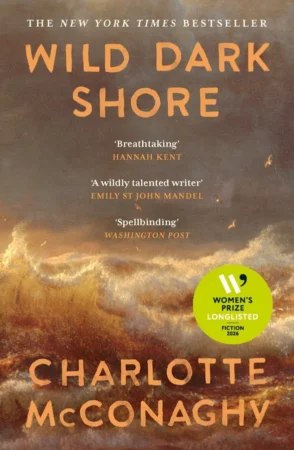
Wild Dark Shore
Charlotte McConaghy
Shearwater is an island seed depository off the coast of Antarctica. Dominic is the caretaker, who lives there alone with his three children until Rowan washes up one day, shipwrecked. But people don't just sail out this way, the odds of a shipwreck washing up are basically zero. So what is Rowan doing, and why won't she tell Dominic? Rowan isn’t the only one keeping secrets, what is Dominic hiding?This is a literary thriller and I think it nails the mystery/thriller aspect, the literary fiction aspects less so, but it works well enough to be a great conversation starter at a book club. Which gets it at the very least a pass mark.
Fen, 17, is the only woman on the island until Rowan arrives, loves marine life, particularly the seal population, who seem to have accepted her into their pack. Orly, 10, clings to Rowan immediately. Raff, 18, is distant and hostile toward Rowan. Orly is clearly suffering from isolation, in contrast Fen relationship with seals asks some lovely questions about human animal relationships. A lot of us have dogs, how different is hanging out with a seal to hanging out with a dog? Are animal relationships enough?
McConaghy the ability to make you think one thing while something else is happening, a great talent for a thriller author. What she does better than almost every thriller writer currently is make both things realistic. She's essentially written two stories and has to be careful not to contradict either while keeping the interaction natural. Is Dominic a misogynist? Egotistical? Protective? Distrusting? All of them? These were my thoughts at various points, some correct, others less so.
It's a bizarre way of building a character. As events unfold we struggle to pin down Dominic, but we also feel like we know him more and more. We know he's hard, strong, gritty, intelligent, resourceful, and prioritizes the wrong things, but we don’t know his character or if he’s trustworthy.
The seedbank has been left to rot by society and the five of them must work and figure out which seeds to save, a hard choice. It brings up the idea of humans interfering in nature. When is it right to make choices about the future of the planet, and when is it right to let it run its course? If rhinos were being hunted to extinction by lions, should we step in to save them? How is that different from saving them from poachers? It is different, but why?
This is a novel that's exciting to read, but rough around the edges. The problem is that it’s a literary thriller. Charlotte McConaghy is keeping back elements of her characters to serve the plot, good literary fiction needs those characters to be fully built, but good thrillers need that mystery element. The genres are just not working together and McConaghy has prioritised the mystery/thriller side.
I’m left with a novel I enjoyed reading, but I never thought this was prize material, more to the point I never thought it was particularly trying to be. It’s a 3 star read for me, but I’m putting it in the why category, because I don’t understand why this is on a prize list.
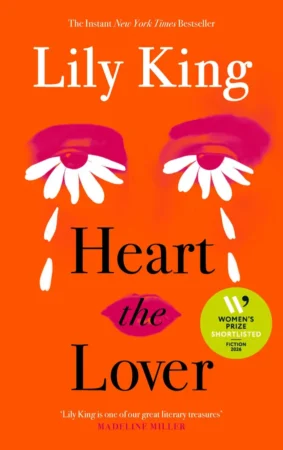
Heart the Lover
Lily King
If you enjoyed this almost love story, you might like to know it is both a sequel and prequel to Writers and Lovers, a novel Lily King published in 2020.
College student Jordan is dating Sam, Yash’s best friend and room mate. The problem is, she very much likes Yash, and the two become best friends.
Decades later Jordan is in a completely different relationship, she has children and commitments, and then she learns that Yash is sick and she makes plans to visit him.
We move back and forward between the two timelines, which colours the reading of the early timeline. As we’re reading that timeline, we’re naturally cheering for Jordan and Yash to sort their stuff out and get together, but we know it doesn’t work, we know it fails. Which kind of asks this question, if a relationship is not going to work, is it worth it? That’s a very simplistic way to look at this book, another theme it brings up is the complex ways we love people and how that love changes as our relationship changes.
This is a great emotional rollercoaster, it’s quite a sad novel, don’t read this in public if you don’t want to cry, but it also has some moments of tenderness. If the measure of a good book is whether the execution matched the ambition, then this is one of the best on the longlist - but, no shade to it, it’s not a prize novel, and just like Wild Dark Shores, it’s not trying to be. I’m not putting this novel into the why category because I think it’s a bad book, but because I don’t think it fits. This is a book trying and justifiably doing very well, at topping the best sellers lists.
A tragic romance, some people say it’s literary, and look I know that’s a subjective call, but I don’t think a copious number of Great Gatsby references makes something literary. There are moments of heart break, moments of love, a discussion about love and friendship. It’s a book I really got lost in, it’s a book I enjoyed and it’s a book I will promptly forget.
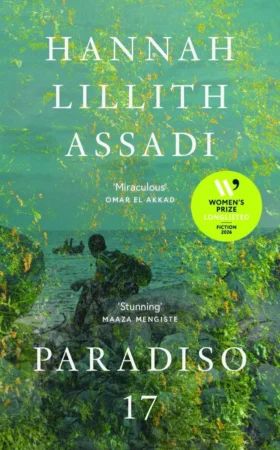
Paradiso 17
Hannah Lillith Assadi
This is a novel with some really big positives and some really big negatives too and I’ll discuss them - but this is a very literary novel about Israel and Palestine and it requires some context.
The 17th Canto of Dante’s Paradiso, the last book in his divine comedy. Paradiso 17 is considered the most important Canto in the entire poem, containing the prophecy of Dante’s exile from Florence. It contains themes of Divine Knowledge of the future versus Free Will. This is what Hannah Lillith Assadi is referencing in her choice of title.
Sufien was born in Palestine in 1948, he remembers the Nakba, it colours the rest of his life. Living in Kuwait, Italy, New York, Arizona and finally New York again, he also feels like he is away from home. Then he falls in love with a woman, Sarah, a jewish woman, for a very different world, a woman from wealth, and a woman who nobody thinks will marry a taxi driver.
The metaphors here are obvious, a lot of the relationship issues stem from lack of communication, differing expectations, but ultimately and this really isn’t hard. The relationship is a lot less problematic than that of Israel and Palestine. They ultimately have children, who are what? Jewish? Palestinian? American? They are of course human, and this book is saying it won’t be perfect, but Jews and Palestinians can live together.
There is an irony that the Palestinian exile began as the Jewish exile ended. The Palestinian Nakba began when the Jewish Shoah ended. Both words translate to Catastrophe. Sufien’s childhood house is later settled by survivors of Auschwitz. The linking of these two events is not a criticism of the Jewish people, Sufien later marries a jewish woman, but rather it is an attempt to show a commonality of experience. Have you ever noticed that migrants from different backgrounds are often friends? They might be from very different cultures, but they can share a commonality of experience and that’s what we’re being shown here. Jewish people and Palestinians do not share exact events, but they do share catastrophe and exile.
The choice of Sarah as the wife of Sufien is not a coincidence either. In the bible Sarah was the wife of Abramham, and she follows him as he wanders from Ur to the land of Canaan in exile. Her conflict with Ishmael, who is considered the father of the Arab people, leads to their exile and creates a biblical root for the tension between the Arab children of Ishmael and the Jewish children of Sarah.
Sufien’s name roughly translates to traveller.
There are a lot of literary references in this novel. With the exception of Katie Kitamura’s novel, this is definitely the most high brow novel on the shortlist. And I don’t think this is a book intended to be read, it is intended to be analysed. To be honest, I probably had the most joy reviewing this book, researching hunches and half remembered facts… However, on the reading side of things, there’s just a few things that didn’t work for me.
Sufien’s relationship with Eden, another name with a reference to exile. Eden however is very unlike her namesake, she is a woman who is dependent on drugs, who video tapes Sufien and her having sex and blackmails him. Her name would have been better as a representation of the snake or the forbidden fruit, but I appreciate the choice and the reference. Thematically and from a literary point of view, I get this, it’s a good choice - but from a basic storyline point of view, what’s going on? She is a representation of Sufien’s lost status. I can see how this relationship begins, but not why it continues. I struggled to believe both characters’ actions. For everything that is wonderful, intelligent and hopeful about this novel, this is the problem. I don’t believe in the characters or the plot. For a novel with so much brilliance behind it, to fail at the most basic level is very frustrating.
Probably still a very good one for fans of pure high brow literary fiction - but it’s not a well rounded novel.
Perfectly adequate book, made of words that are on paper.
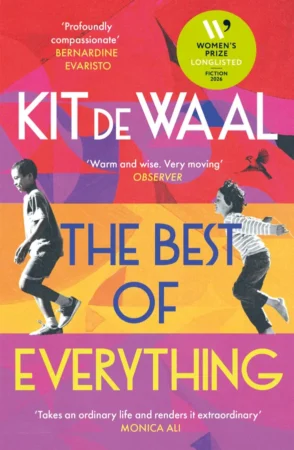
The Best of Everything
Kit de Waal
To my North American viewers, this novel has a different name in your market, Sweet Pea.
Paulette loves Denton, they’re going to get married, if he ever gets off his butt and gets serious. Then one morning Denton’s best friend Garfield comes over to tell Paulette that he’s dead, it was a car accident, and that she cannot say goodbye.
Paulette and Garfield end up together, he’s everything Denton wasn’t. He doesn’t make excuses, he shows he’s committed to her, they even have a child together, Bird, but he doesn’t make her heart flutter. Then one day walking in the park Denton points out a sad old man to Paulette, “that was him, the driver”, and with him is another little boy, the same age as Bird, Nellie.
This is a strange structure for a book, because it’s basically a coming of age novel about Bird and Nellie - but it’s very clearly Paulette’s novel. It is her emotions we sit with, it is her voice that tells the story.
This novel has crisp clear prose, it does use a little Caribbean dialect, but if that is something you struggle with, I recommend this as a good starting point. I think the character communication and drawing is well done. I quite enjoyed this book, but I do think it’s just a little too 101. Paulette doesn’t quite evolve enough for me, and when you think about it, she actually undertakes a massive emotional journey over these 20 years, constantly changing to suit the situation, she is a completely different character by the end of the novel, and I believed all that, yet it is the things that don’t change that I struggle to believe. For all the forgiving she does in this novel, she remains impulsive, hotheaded and judgemental. For everything she achieves she remains insecure and doubts herself. None of these things are impossible, they actually tell us who Paulette is, this is not a big flaw, but I needed to know why these personality traits stayed the same while others evolved. The character writing is actually really good, because I very much understood who Paulette was, but I didn’t understand why she was like that, it needed that extra push for me.
This is another book exploring friendship and love, which do seem to be recurring themes. Motherhood is added to these themes, but obviously it’s a book where love is a major theme, and the love between parent and child is one of the major ways this book explores love.
Overall, a good book, but lacking a bit of an x-factor. The other books in this category have more highs and lows, this I feel is a consistent polished author who just hasn’t found the magic dust when she was writing.
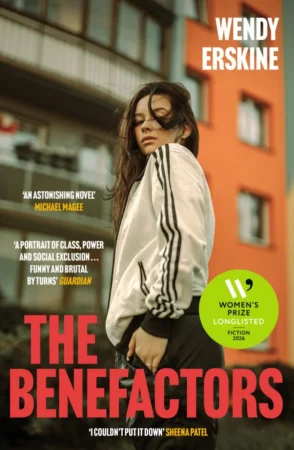
The Benefactors
Wendy Erskine
One night three young wealthy boys go out with their friend Misty Johnson, somebody with a connection to drugs and from the other side of the tracks. The three boys engage in sex with Misty, who later reports them for sexual assault.
Let me make this clear, the three boys rape Misty - but the social dynamics of the situation and the naivety of some of the boys, means that their levels of guilt and the harm they inflicted are not evenly distributed. The boys feel peer pressure to participate in the encounter, there are a number of ways we can mitigate the boys actions, there are a lot of things people say are grey, but that really isn’t. We know this, because the central characters are not the boys, but their mothers, who are very eager to protect their children and their family name. While they try to shift the guilt to the other boys, they know there’s guilt.
Misty’s mother is away in Scotland, but she has her own parental figures helping her, Nan D and Boogie.
This is a book that doesn’t feel like it starts until the halfway mark of the novel, when we get the rape that everybody who read the blurb knows is coming. Prior to that event the novel feels cold and almost a bit info dumpy, it fails to create an emotional connection to the characters. After the rape, it’s like a completely different author took over. The remainder of the novel explodes into your brain, it’s emotionally nuanced, and the way Erskine shows the, I’m going to call them adults of the novel, the way the adults spin different narratives to their own ends, is brilliant.
As the mothers set out to fight for their newly grown up children, you start to trust their sons, the rapists, more than these women. Who outside of this event, are all virtuous, even philanthropic women of Belfast, one of them is even the CEO of a children’s services charity. One of them helps children only a year or two younger than Misty build a life.
One of the many questions Erskine is asking is, what will a mother do for her child? Will they sabotage their values for a child?
Misty feels like a completely broken character, and she doesn’t even know what she wants out of the event. Her adults are pushing her to ask for a cash settlement, but that doesn’t feel right to her. What does she want after the event? How does she heal? You never get a feeling of hate from Misty towards the other characters, but a profound sadness, a feeling of loss, and acceptance of the powerlessness of the situation she found herself in.
The cash settlement is the pragmatic best choice, it is a glaring criticism of the Northern Irish legal system, a criticism that I think can be extended world wide. We might as well get the cash, it will save Misty from a traumatic trial and these boys are all wealthy, they’re not going to jail anyway, get what you can… There’s almost a you’ve earnt it vibe.
Misty worked online as a sex worker. You get these scenes early on where Misty figures out what she will and won't do and why she’s doing it, setting her boundaries so to speak and assessing her risk. Later the mother discuss if they could or should use this as a way to discredit Misty. Adding a layer of slut shaming culture to the novel, as well as expanding the conversation around consent.
I think this is a book every young man should be forced to read, maybe at school. These boys are stupid and naive, they don’t understand consent, they’re too scared to stand up to their friends and they rape a girl, and traumatise her. I don’t think the boys in this novel were particularly evil, but they did a particularly evil thing, and I wonder, if they read this book, would they still rape Misty? That’s another question this book is raising, how do we raise boys?
If this book had been hitting the mark early on, it would be a potential winner.
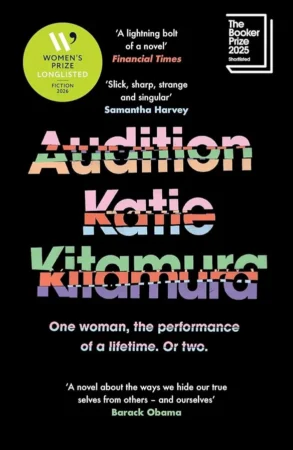
Audition
Katie Kitamura
Every book by Katie Kitamura I read leaves me feeling like I've missed something. Intriguing, thoughtful, but the kind of book that needs a reread to get the maximum value from.
An elegant woman in her early 50s meets an attractive man in his late 20s at a restaurant. What's their relationship? Lovers? Mother and son? Professional colleagues? Muse and mentor? The first half of this book is basically a conversation they have while eating.
Then the novel shifts abruptly, it’s a different universe, the characters are playing different roles. Our protagonists are actors, so we’re left asking, which part is real life and which is the performance? Maybe both parts are acts?
This explores the roles we play, the assumptions we make about people, and the sacrifices we make for those we love. Again the different types of love is a theme in this novel.
When the roles change mid-novel, it's jarring, and deliberately so. That disjunction is the point, it makes you question what characters even are in fiction. But it doesn’t help the character work. It is easy to follow, hard to understand, which I normally love in literary fiction. Here though, it feels like the trick has been played and we’re left asking, well now what. It is an interesting conversation, but it could have been so much more. I wasn’t indulged, I don’t have a lot to say about the themes, because the book didn’t say a lot on the topic.
Can an author create emotional attachment between reader and character, when the character itself is unstable? This is the experimental novel's curse: brilliant concept, alienating execution.
Some people will love this. Some will hate it. I see both sides. Interesting, not entirely successful.
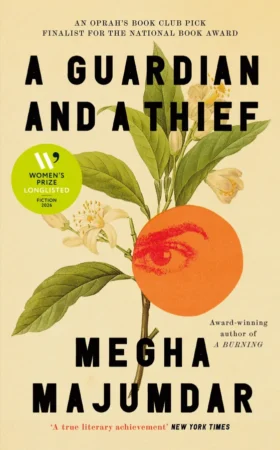
A Guardian and a Thief
Megha Majumdar
The biggest problem with this book is that it is not A Burning. Majumdar is an author who set the bar so high with her last novel, that when she writes a perfectly good book as the follow up, I can’t help but to be disappointed.
In a near future climate dystopian Kolkata, a city with the characteristic haves and have nots of capitalism, Ma is trying to get flights to Ann Arbor, Michigan for her, Mishta, her 2 year old daughter and Dudu, her elderly father, so she can be with her husband again. On the morning of the flight she discovers that the visas she waited so long and patiently for, that she queued, bribed and fought for are missing.
Desperate to feed himself and his family, Boomba, a thief, commits a series of crimes, completely unaware of their consequences. Boomba is so ravaged with hunger, that he is skinny enough to fit between the bars on Ma’s window.
But who is the real thief in this story, Boomba steals to feed himself and his family. Ma embezzles from the charity she works from, it’s urgent that she leaves, soon the Billionaire will find out. Meanwhile the Billionaire throws a party for everybody in the city, all will leave with full tummies, all will have ice cream. In a city where not everybody can feed themself, is it ethical for somebody to be able to feed everybody?
In Boomba our thief, we have a character who is the villain of the novel. Without his interference, Ma is on a flight out of India as a climate refugee. Yet, you can’t help but to feel sorry for him. He will remain in India, in the unlivable heat, through the water shortages, he is hungry, he cannot feed his family, he is homeless. Majumdar shows us how he is forced into crime.
It’s a powerful challenge to the hierarchy of the world, when you learn that inequality and crime are like politics and corruption, if you want to clean up one you need to address the other. Most crimes are committed by people in need, people who are desperate, people like Boomba. Majumdar is destroying the narrative that thieves lack morals, that they’re unethical, she’s showing us that feeding the people you love is more important than the law.
If you disagree with that, if you’re unsure about that, then you’re going to have a paradigm shift when you read this novel and that’s powerful. BUT, I was waiting for more. This book is a little too obvious, each chapter basically started with Ma definitely getting on the flight or definitely not, then running into something that changes her plans. It kind of became too obvious. That is not to take away from what is very strong writing, good character creation, a nice thematic linking between late stage capitalism and a realistic dystopian future, the setting work is very good. I just needed something more, a bigger emotional hit, an extra theme, or a plot that wasn’t quite as predictable. It needs something to push it from good to great.
Mmmmmm, Books
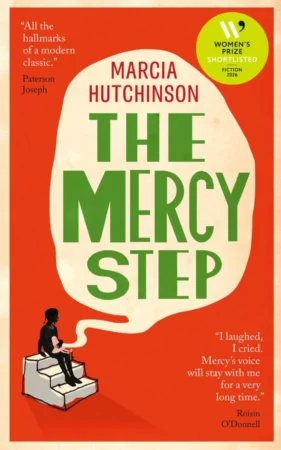
The Mercy Step
Marcia Hutchinson
A coming of age historical fiction set in the Windrush era, beginning in 1962 Bradford, with the birth of Mercy, she is the 5th of her parents 7 children. She is a somewhat needy child, desperate for the love of her mother. Justifiably needy considering the circumstances.
Mercy never feels like she fits in, she’s bookish, intelligent, on the introverted side of things, and has a rich internal monologue. One of the few criticisms I think people could level at this novel is that Mercy’s voice is too old for a girl who spends a lot of the novel in her pre-teens and younger. I couldn’t care less about this. The rich and vibrant prose we get instead is worth it, and the character work is strong enough to withstand it. There is plenty to centre readers in Mercy’s narrative and remind us who she is and of Mercy’s age.
There’s some pretty big trigger warnings in this book, domestic violence racism, and sexual assault being the major ones. Mercy is also raised in a toxic family, she wants nothing more than a dolly for her birthday, she risks a beating whenever she hints at her desires, and when she finally does get a dolly, it is often referred to as that bit of plastic.
The novel gets its name from the step where Mercy likes to sit and lose herself in a book, a place where Mercy can lose herself and feel safe. It’s a nice detail for the story, but I don’t think it’s a coincidence that it becomes the title. It’s the place Mercy craves, not the step itself, but the security and belonging, the safety and the ability to be herself and experience the simple joys of getting lost in a good book. If you have a nice step in your house, maybe you can read this book sat upon it.
In my experience the theme that hits home the hardest is domestic violence. Mercy doesn’t understand how Daddy could love Mummy and do that, but she very much doesn’t understand how Mummy could love Daddy after that. Whenever it happens there is almost hope from Mercy that Mummy will leave Daddy and pick her instead. Hope that is soon crushed. Hope is a weird emotion in isolation, and Mercy has plenty of anger, wrath and vengeance in her soul, as well as guilt. She uses her faith to wish harm on her father, and consequently feels bad if something happens. This is an aspect of Marcia Hutchinson's writing that is strong, emotion isn’t static, and showing us how it changes with events, time and hindsight, it builds the complex web of these family relationships, it builds the characters.
Mercy goes through some very normal girl things too, she makes friends at school. Through microaggressions and kindnesses the girls form alliances. Mercy realises the popular girl is a very good sprinter, but when they’re running cross country, Mercy can go faster than her. Mercy must decide if she is to look after her own athletic ambitions or her friendship with the popular girl. There are a number of microplots scattered through the novel like that, but this particular event leads to one of my favourite scenes. Where the athletics coach, an Irish man, asks the Black girls how they want to be addressed. Rather than being a negative example of racism, we are shown a positive example of how to respond to criticism - however it is the combination of the confusion from the young Jamaican British girls, that a middleaged Irish man is treating them with respect, that endeared all characters to me. Marcia Hutchinson is of course making a point about the nature of racism, especially racism in the 60’s and 70’s, and the commonality of the Irish and Windrush experience. Racism is bad, that is not a sophisticated point, we all agree, racism is not just about the colour of your skin, that’s a cool point, but it is a point mitigated by how off guard these girls were by the positive experience.
I did want something a little bit more from this book to elevate it. Something to make it stand out - but overall, this is just a fantastic example of how to write a coming of age story, it’s another fantastic book from a Caribbean author, a part of the world that very much punches above its weight when it comes to quality literature.
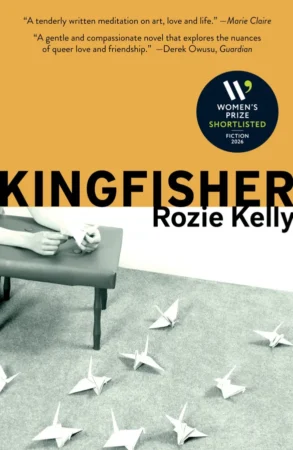
Kingfisher
Rozie Kelly
This is a beautiful and complex novel, about, guess what, love.
Our protagonist is a gay man, in a loving relationship with Michael, who wants to have an open relationship, but also wants to be committed. It’s a tearing down of the structure of a relationship to find something that works attitude; but it doesn’t overly work for our protagonist. That is until he finds himself obsessed with an older work colleague, and as he puts it “a woman of all people”. His Kingfisher.
This is quite a short novel and I love that Rozie Kelly said to herself, I don’t need that many characters. If you were turning this novel into a play, you would need to have our protagonist, the poet, the poet’s friend, Michael, the other man Michael likes, Jessica, our narrator’s best friend and Hetty, the narrators mother, 7 actors to play the parts and 2 of these characters are quite minor. I may be missing a lady at the supermarket, or a similarly minor role, but that’s really it. Essentially with 5 major characters Rozie Kelly has created such a complex web of relationships, but because there are so few characters, it is very clear.
I said this is a book about love, but it’s also about something else too, endings, I mean death, but I also mean endings. Some people die, but so do some relationships, while some endure. It won’t be a surprise to anybody part way through the book that one of the people to pass away is Hetty, and she is a miserable old lady, and she is a lady who doesn’t love anybody. She is receiving care from Michael, her son in law, but calls him an f-word and asks not to be visited by him. Our protagonist avoids visiting his mother in hospital, while Michael makes a point of seeing her and looking after her. While we’re seeing the different ways people love each other, Michael is looking after this horrible homophobic woman because he loves our narrator, but that’s not the love our narrator needs. This is a symbolic act that shows us that their relationship is not working, or maybe it is Michael feeling guilty for pursuing other men.
In contrast the poet, who is a woman of minor fame, says in an interview, that she has had many lovers and takes from each what she needs, she lets them provide her a service. It’s a quote our protagonist ponders on, what service is he providing and is he getting a service back?
For me the truest love in the entire novel was between Jessica and our narrator. When Hetty dies he doesn’t know what to do, and she helps organise him, takes a few days off, cancels a holiday and they go down into the English countryside looking for a nice place to leave Hetty’s ashes. Jessica and our protagonist went out on a date, and became friends when he realised he was gay, now that he’s dating a woman again, what does Jessica think?
There is a real melancholia about this novel that I’ve not yet discussed. There is an exploration of grief and moving on, obviously I’ve very unsubtly foreshadowed the death in this novel too, but there is a lack of purpose and direction, a depression from our protagonist. With this lack of direction Rozie Kelly is demonstrating that the people around us, the connections we make in life, are things that provide us with meaning, even if those things, those people are temporary.
This is just a really beautiful novel.
WOW! Potential Winners.
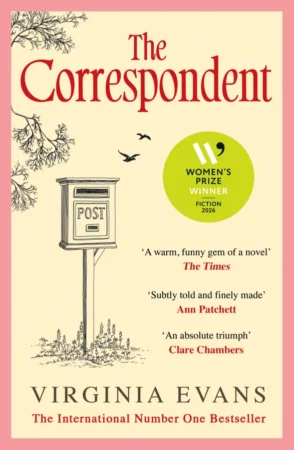
The Correspondent
Virginia Evans
If you watched my last video, you will already know that I loved this book, and if you haven’t watched it yet - What’s wrong with you?
I love this book, it’s gorgeous, emotional, and first class character work… But I literally just reviewed this book 7 days ago, so if you haven’t watched that video yet, the link is in the description, there’s even a time stamp in that video so you can just watch a review of this book if you want.
I’m calling this my first potential winner, I’d be very happy to see this one receive the praise and reward that winning this prize would mean - but it’s probably the book that needs it the least, as it’s already selling lots of copies.
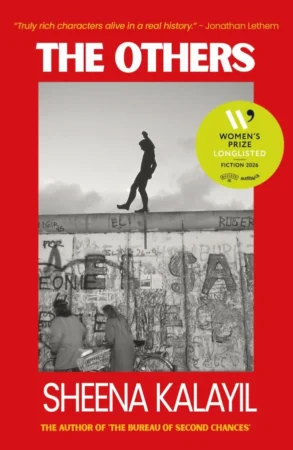
The Others
Sheena Kalayil
This is a dystopian, historical fiction, love triangle novel. The year is 1989, set in a small city not far from Berlin, on the East side of the wall.
Armando is a factory worker from Mozambique, we meet him as he tries to balance taking Lolita Devi, an Indian student in training to become a doctor, on a date, with looking after Clara, his 3 year old daughter. Clara’s mother Petra is a well to do Ossi. Apologies to any German speakers out there who are either cringing or laughing at my Aussie pronunciation of Ossi. This is a term I learnt from reading this novel, it essentially means East German.
Armando and Petra were only really together for enough time to make Clara. Nonetheless, Petra almost punishes Armando by keeping his time with Clara to a minimum. One of the challenges of reading this novel is to determine if this is a seduction tactic from Petra or a demonstration of her fierce independence. I came down on the side of independence, but found it hard to rule out both.
Armando’s time with Lolita is cut short, as he balances work, parenthood and Lolita’s roster. While they are still in the dating, but not exclusive stage, Lolita meets Theo, a want to be author who is very keen on her, while she very clearly doesn’t share his enthusiasm, she does like him, she does feel something for him. These are the four players in our love triangle. Two foreigners and two locals, two people who don’t know if their future is in East Germany, but know that marrying a local is just about the only way to secure that, two foreigners who clearly have a special connection, and one foreigner who may have to pick between the woman he loves and the daughter he adores.
The opening date between Armando and Lolita is on the beach, and Armando sees something floating on the water. He rushes out to it and brings in a dead body attached to a surf board. Soon the Stasi show up and intimidate Armando and Lolita, their discovery of somebody trying to escape before the Stasi did, looks bad on the Stasi.
Talk about a recurring theme, the different ways people love is all over this longlist and we’ve still got books to review. This however I think is such a complex way of exploring that theme, parental love versus romantic love isn’t new, but Sheena Kalayil explores different types of romantic love, the love Armando has for Petra the mother of his children, it isn’t romantic, it obviously isn’t paternal, but what is it? Lolita has different feeling towards Armando and Theo, she loves both romantically. Armando’s best friend Joachim, the two clearly love each other, but as friends. Theo’s grandfather Rainer is a character who as a reader it is hard to like, yet both Theo and Lolita love him, and he loves them, forgiveness and love are explored. Then there is love of country, Petra calls herself an Ossi fondly, but Theo longs for reunification, both characters love their countries, but they’re very different countries. With that there is the exploration of reality and perspective when it comes to love.
Armando’s feeling for Mozambique is also complex, the country at the time is in the grips of a war. Returning would mean that he has to leave both Lolita and Clara, clearly not an option for him, yet there is an affection towards it, maybe just a warmth, but there is a clear love for his past.
Love isn’t the only theme, life in East Germany and the fear created by the Stasi is very present. Sheena Kalayil is able to really capture how normal a lot of life is, but also, this unease, this feeling that life isn’t safe, another aspect here is as we change from Theo to Armando or Lolita, the world treats these people differently, this is wonderfully done. Racism and Sexism in an authoritarian country can be explored in such a simple way.
Towards the end of the novel two things happen, the fall of the Berlin wall, and an event I won’t name, spoilers and all. Something happens to one of our central characters that completely changes the lives of everybody involved. That event ensures you’re scrambling for answers at the end, this is satisfied, but rather than leaving you with a satisfying ending, Sheena Kalayil leaves her readers with a thought provoking one.
A really outstanding novel.
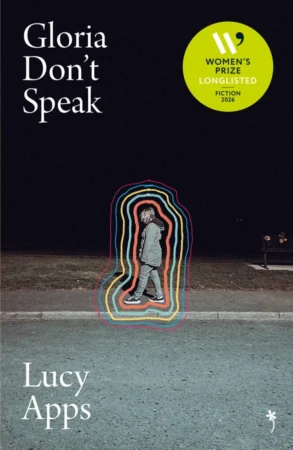
Gloria Don’t Speak
Lucy Apps
I have never read a book from the point of view of somebody with a learning disability before. I’ve read books with people with learning disabilities in the novel, but never have they been the protagonist. It’s a brave choice from Lucy Apps, but she succeeds simply through intelligent writing.
Gloria as the title suggests doesn’t really speak, she can speak, and at times she does; but it’s minimal, it’s clearly difficult for her, and she clearly finds communication challenging, I would say overwhelming.
It’s 1999 and 19 year old Gloria lives at home with her mother, she goes for long walks throughout the day and experiences the world. It is there she meets Jack, Jack is good to her, he buys her chips and coke, but when Jack gets too close to Gloria she gets uncomfortable, and when Jack notices he gets angry. “How long have we been friends and in all that time I haven’t touched you once”. Still Gloria returns to Jack, until one day something happens and the friendship has to end.
Years later Jack is out of prison. Gloria has moved from her mothers house, to a house where people care for her. When Gloria learns the news that he is out, she looks for him everywhere, sees him in places he isn’t, she gets scared.
What I think is amazing about Gloria as a character, is that we witness her need for connection, for friendship. Jack is a truly horrible character, but he spent time with her, they ate chips and drank coke, they watched the world, they form a meaningful connection, without Gloria speaking. When Jack goes to jail, Gloria is lost, she follows people into their house, she is lost, she doesn’t know what to do, Jack not only provided human connection, but structure. In the second half of the book, not only has Gloria lost Jack, but also her mother, she still visits Gloria, but she wanted to make sure Gloria was accommodated while she could still come back. It is common sense from her mother, but it’s daily connection lost for Gloria.
The other thing this novel is really looking at is trauma, and how we process it. Gloria can’t speak, and while obviously everybody knows what she witnessed, it’s clear she’s going to be traumatised, but she doesn’t express it, she can’t talk it through, she can’t provide the feedback needed for effective therapy, not that this is attempted in the book, but at no point does anybody sit down and talk to her about Jack and what he did. It’s weird how communication is so important to us, how words give us meaning and importance to other people. Most people around Gloria respect her and want to help her, but she thinks Jack is everywhere, she’s seeing people, and she’s too overwhelmed to tell anybody and she’s too non-verbal for them to realise she is off. It is a book about the limitations of communication that makes the us readers realise just how important it is to who we are and how the world sees us. This is a book about how important language is when processing trauma.
Lucy Apps uses echolalia in Gloria’s head, Okay, okayo, kayo, ayo, yo. It sounds like a gimmick, but the way she uses it to focus on things, to district, to show you Gloria’s thoughts, very intelligent. It means we understand Gloria’s world and focus, but are given enough to know what’s actually happening and it’s all very easy to read. It gives the novel a rhythm and flow, which makes it a delight to read. First class prose, easily the best on the longlist. Gloria is a wonderfully drawn character, so complex, so simplified by those around her, and I was so invested in her outcome.
It is books like Gloria Don’t Speak, which is why I like reading prize longlists, it’s unique, it’s well crafted, I’d never heard of it before, and it is truly special. This is my favourite book on the longlist, it is the book I hope wins the prize and it’s just an excellent read. Also, it’s quite a quick read, it’s not a big time commitment.
We’re only a few days out from the shortlist, and I’d love to end with a prediction. I want to include my top five books, Gloria Don’t Speak, The Correspondent, The Others, The Mercy Step and Kingfisher, I think these are a step above the remaining books. Of what’s left, I think Paradiso 17 has the most potential, it’s not my favourite novel, but there’s a lot in it, a reread will probably be quite favourable and I think a book with strengths and weaknesses is likely to do better, that a book with fewer faults, that said, if I’m just going to pick my favourite 6, it’s A Guardian and a Thief. I’ve already said I want to see Gloria Don’t Speak win, that’s my favourite from the longlist, but I think any of my top 5 would be a worthy winner.
Overall, this is a longlist about love, the different ways we love, the ways love changes, the challenges of love. I think overall it’s a good longlist, but there’s a few too many books that play it safe, and there’s a few books I’m not sure about at all. It’s a strong year, but not an outstanding year, although, and I think this is most important, it does contain a few outstanding books.
Thank you for watching, don’t forget to like and subscribe.
Bye bye.