

Watch Scott’s video on YouTube ↗
Is this really the best we can do? I’m going to review every book the Booker Prize longlisted, but I’m warning you, this is not going to be pretty.
I’m reviewing these books alphabetically by the authors last name, at the end I’ll predict a shortlist and a winner and give you my final thoughts - but I’m going to start by contradicting myself
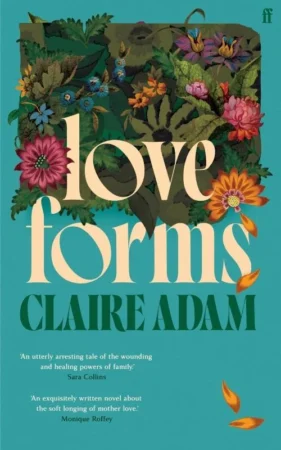
Love Forms
Claire Adam
I set this up basically saying I hated the longlist this year and I am going to start with a book I think is a really enjoyable read.
Love Forms is the story of Dawn, who at 58 receives an email from an Italian woman, who might be her missing daughter. At 16 Dawn got on a boat from Trinidad and Tebago to Venezula, gave birth to a daughter, handed it over to some nuns and left. 40 years later she is living in the UK and regularly travels back to her home country to visit her Mum, still when she mentions her daughter it creates tension.
This is a novel that oscillates back and forward in time, centred around Dawn at 58 wondering if she should request a DNA test yet, obviously there are large chunks when Dawn is 16 too - but we get several parts of her life. I loved the exploration of her drive to be a doctor and eventually giving up because her husband was one too and they had children and who would look after it; it was a really intelligent thing to juxtapose against the stigma around giving up a child. There’s a lot in there about choices and roles, the patriarchy and the sacrifices of motherhood.
Another theme I enjoyed was Dawn being a light skinned Trinidadian with an accent and the stigma she came up against in the UK, the confusion. Racism is not a singular experience, it’s not the same for all people, and I don’t think it was particularly bad for Dawn, but her accent did carry a stigma, people did treat her differently, she still suffered from racism.
Of course motherhood, adoption, reconnection, the absence of a particular child from your life, the question of what might have been are the central themes explored in this novel. There is nothing particularly revolutionary said on this issue, but it is an emotionally nuanced and sophisticated character lead exploration of the topics.
The plot is in some respects really simple, but somehow complex too. It all climaxes on the results of the DNA test, but as we wait for the results and learn more, we learn and appreciate the complexities of both results. It is a granting of freedom to Dawn, the letting go of an unhealthy obsession and is letting go of that more important to her as a character than finding her daughter. There is the relationship she is building with this Italian woman, an uneasy friendship which they will have to pretend was always something more, or move away from completely, asking what is family.
The characters and the settings created in this novel are brilliantly executed - by some distance this is the best novel on the longlist at both of them.
But this is much more a women's prize style book, emotionally complex rather than intellectually rigorous. And there are other books doing this better than Love Forms, I still think this is the sort of book I am really happy to read, there is no real area of criticism I have, everything is good, but I needed something spicy, explosive or exciting to lift this to amazing.
Still really recommend this novel - and as an aside, I notice Claire Adams first novel was published by Sarah Jessica Parker, so for all the hate she got for being on this prize, she’s responsible for getting one of the only decent books on the longlist. Maybe we needed more SJP influence on the longlist.
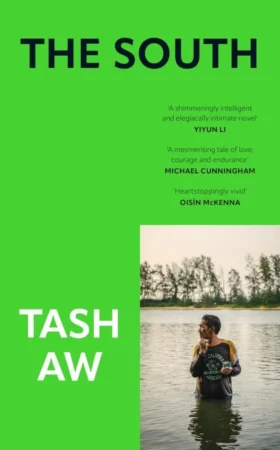
The South
Tash Aw
Set somewhere, I believe in Malaysia, but I could be anywhere. This is the story of a family returning to their roots and inheriting a house nobody wants while a young gay man falls in love for the first time.
This novel is slow, over written, boring, really boring, without characters, setting or plot - I mean a novel called The South and about moving to a new place, has no setting constructed. The point of view changes too much, causing the reader to become lost, something which is certainly not helped by the novel's lack of suspense, emotion or intellectual stimulation.
There are little fragments of tenderness in the novel, Jay’s desire to have his love making be slow and tender and then, well he’s 17, his desire to be clean for his lover, only for Chuang to remain musky. But these little moments are not backed up. It’s like being promised a meal one tictac at a time and by the end of the 6 hour meal you want to hurt the chef for buying such unreasonable sized plates. The inexperience and disparity within the relationship at points could have been a touching subject if it were explored, if this novel has characters to build the themes upon, if the prose was up to the standard required, if a bull had tits it would need milking.
This is ultimately the issue with the entire longlist, this novel is sparse. It has both the ambition and the structure of a loose stool.
That this is the first of 4 planned novels is baffling. I am a big advocate for DNFing a book that you’re not enjoying, but Tash, you can DNFing writing a series.
By no means the worst book on the longlist, it really should be, but this longlist also contains.
One Boat
Jonathan Buckley
If you are planning to read this book, let me tell you something you won’t realise or will just forget. The protagonist is called Teresa, she is apparently a woman, although I am going off the name and nothing else.
Set in Greece, you know this because of the Greek words - but sadly not the descriptions. Teresa is visiting Greece for the 2nd time and meets all the people she met the first time, most of whom are tediously boring and won’t be included in this review - it’s called editing out the shit bits, something this author knows little about.
Let me tell you something of little consequence that upset me, at some point she was reading the Odessus, and it brings up thoughts of returning, something Teresa did, but after 9 years. I mean if you’re going to reference a book at least read it, Odysseus was gone for 20 years. I know ultimately this doesn’t matter, but it’s nails down a chalkboard. A small part of me is tempted to beat my head against a solid object in the hope of forgetting this fact, but at least this book warns of the impact of blunt force trauma.
I didn’t finish this book, I was almost halfway through when I gave up. In that time, the only character I was remotely interested in was a man who lost his younger male relative after he was punched in the face and died; I’ve got a hunch it’s nephew, so we’re going to assume it's nephew for the rest of the review. The killer was charged with manslaughter and was out on good behaviour. Unfortunately the characters are so weak that the humanity of the situation has been removed? Was the man grieving? I’ve no idea.
This is the most lacking novel to make a Booker longlist in a long time. Let me clarify that, there’s been worse novels, but not one so lacking. The complete lack of attempt at character construction makes it hard to build on, but honestly, the author really isn’t trying anything thematically new, complex or nuanced either.
I have no idea what the judges thought they were doing longlisting this book, then I read a review online that said, this is what the booker judges do when they want to longlist Rachel Cusk, but she hasn’t released a novel… That’s quite complimentary to Jonathan Buckley, I’d say it reads like the book Rachel Cust would write if somebody shot her with a horse tranquiliser.

Universality
Natasha Brown
I have already reviewed this and called it my most disappointing read of 2025 to date.
A man is murdered at a rave, bludgeoned to death with a gold bar. Love the metaphor - but that’s where the novel goes off the rails for me. A journalist starts interviewing people, as we try to understand the motives and the situation around not just the murder, but a group of anarchists who lived on the farm.
There’s been a lot of books lately including a biased or amoral journalist, being critical of our media - and this is another book. It’s not really enough to say the media is biased, of course it is, everything is biased and it’s not a particular revelation to say that the media isn’t trying to act impartially and has terrible morals.
What is lacking from this in the novel is any nuance in the discussion, and this is missing because our journalist isn’t a fully realised character. I am sure Brown has a fantastic idea of who her characters are, but she rushes things in an attempt to make this novel fast paced.
Authors, please, write books like you make love. At a pace appropriate to the development of the scene and the characters involved, if in doubt, slow down, repeat, give everybody involved a bit of attention. Don’t just plow on through, collect your money and leave the reader feeling confused and unsatisfied.
This is a critic of the powers in our society, it’s not hard to agree with what Natasha Brown is saying, but it’s not challenging, she’s not dropping the mic at any point. She doesn’t create a connection with her characters, so can’t build emotion like she did in Assembly, which limits this book. She’s tackling a similar but more basic topic to her last novel, and she doesn’t have any of the complex pulling of characters, the intersection of identities.
It is, to repeat a word you’re going to hear a lot, too sparse to be a good book. Too simple. Without character construction or plot.
This novel is an example of why authors shouldn’t rush their 2nd book, and it wouldn’t be hard to argue that this is an example of a prize failing to award an incredible book and trying to fix that by awarding the author’s follow up book, a book of significantly less quality.
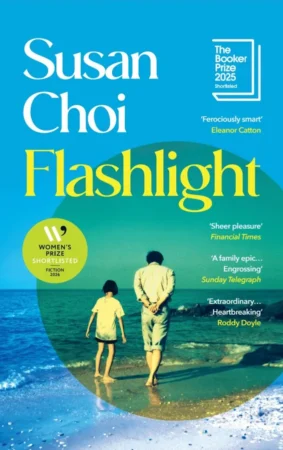
Flashlight
Susan Choi
Initially I was loving this book, but it just kept going and going and going and really had a lack of focus. 464 pages long and it felt like so many more, this is at least a 700 page novel.
A girl, Louisa, goes out with her Dad and then her memory fails and she wakes up with a flashlight on the beach at night and he’s disappeared.
Taking place between Korea, Japan and the US, this is a family saga that jumps around in time.
Serk, our missing father, was raised in Japanese Korea, and felt more Japanese than Korean, not being able to read Korean, using a Japanese name, and feeling very out of place when Korea was liberated from Japan at the end of WW2 and suddenly the ban on the Korean language was over. I enjoyed this interesting conversation around identity, the suppression of a people and the power of language, although, and this is a longlist theme, it was a little raw, sparse and under-explored.
Anna, Louisa’s mother, is our third major character. Large chunks of this novel are written from her point of view, mostly after the Flashlight incident. While Serk’s narratives are predominantly from his childhood. Which does create a bit of a disconnect and this is further imbalanced by Louisa being a side character in both their stories, she is the thing that links them, but she is a completely different age, has changed, has different feelings for both her parents and is seen differently by them, there’s a big disjoint in her character, and we needed more from Louisa’s point of view to get her.
What initially starts out as almost a family saga, intermittently moves into a spy mystery novel, and I wasn’t convinced, it took me out of the story, it was disconnected from the rest of the book. The plot is clunky and granular to the point of appearing to be made from lego, it’s added olives to a mixed berry smoothie, two things that can be delicious, but shouldn’t be blended together.
The character creation was frustrating, initially I’m seeing particularly in Serk this complex character who is confused about being Japanese or Korean, but this is not there to build him as a character, it exists to force the plot. Anna being disabled is similar, initially you see this woman frustrated by losing the use of her legs and not knowing why, but again, it feels like an element that was needed to push the plot together, to create this unlikely friendship Anna has.
I’ve not mentioned Tobias, Anna’s son, who was never really part of the family, and never really part of the book, although he took up a lot of pages.
Thematically this is sprawling and lacks focus, the themes are granular, they don’t intersect.
The setting is a struggle too, when a novel is set in 3 countries, a really good way of examining the setting is to ask, can I tell where they are? What clues do I have? Never did I feel like, the characters dominate the setting and one of the themes is people living in countries they weren’t born in. The characters are creating the setting, and it feels like the wrong place.
Fortunately this is a novel that is much more enjoyable to read, that it is well executed - which really is fortunate, because this is a really poorly constructed novel. You know how good novels can something start off as just okay, then kind of good, then proper good and they just keep getting better? This is the opposite, I enjoyed this initially, but as it sprawled, as we didn’t come back to things, as things were left half discussed, as the inefficient prose made everything take longer to read than needed. It just got worse and worse.
A poorly constructed, disjointed novel, whose only saving grace is that it had the potential to be better.
The Loneliness of Sonia and Sunny
Kiran Desai
Every year the Booker Prize does this, never do they think they should bother changing their dates. This book is not released for another 6 weeks, I have been ignored when I requested an ARC.
This is sales and marketing 101, it’s basic. The purpose of a book prize is to promote books, in the Booker’s case the alleged best 13 books. If you’re trying to promote books, put as few obstacles between that book and the reader as possible. Move the key dates back a month or shorten the eligibility window to 50 weeks for the next couple of years.
But find a way to make sure the books on the longlist are available for readers who want to read along.
That all said, I’m relieved I didn’t get an ARC for this book. My only previous experience of Kiran Desai, The Inheritance of Loss, was frankly terrible, and has a lot of the same flaws as many of the books on this longlist, lacks focus, no character construction, says very little with way too many words, ill explored themes.
So I’m pretty happy to dodge this book, which means it will probably win. Honestly, it wouldn’t need to be too good, frankly at this stage, I think being good would disadvantage a book’s chances of winning.
Audition
Katie Kitamura
Kitamura is an interesting and challenging author. Every time I read a book by her, I feel like I’m missing something and need to reread it to fully appreciate it - yet I always find her work intriguing and thought provoking.
An elegant early 50s woman and an attractive late 20 man meet at a restaurant for lunch. What is their relationship? Clandestine lovers, mother and son, professional actors, friends, muse and mentor?
Then the novel changes suddenly, it kind of feels like a different universe. Like all the characters are actors and the parts have changed… But then again our two main characters are actors. So maybe the question is, is one part real life and the other a play or movie? Maybe both parts are acts?
This is a novel exploring the different roles we play and along the way also looking at relationships, love, exploitations, the sacrifices we make for the people we love and the assumptions we make about people.
This is a novel that would really benefit from being read twice. There’s a lot of little things I was starting to see at the end of the novel that I wasn’t seeing at the start because I wasn’t sure what the book was doing yet.
When the roles in the novel change, it is really abrupt and it makes things really challenging to understand, but not challenging to follow, it’s an easy book to follow. I love my literary fiction like that. I feel lost when I struggle to follow events. While struggling to understand themes and everything that is going on, I'm much more comfortable with that, it encourages me to sit and think about them, come up with theories, it’s really thought provoking.
But the two parts are really disjointed - and this is both a blessing and a curse. It is the key to start pondering the themes around the parts we play, without that the novel wouldn’t work - but it’s jarring, and it means the character building is wacky. I mean it’s a novel that is challenging the role of characters in novels, so of course it is wacky, but also, as somebody who considers themself a character reader, I can’t say it was completely enjoyable to read. This couldn’t be a traditional novel, but it falls into the curse of being an experimental novel, it might be a bit too jarring to be enjoyed by a lot of readers. The characters are uneasy and can an author ever create a connective feel with the characters under such circumstances?
Some people are going to love this one, and some people are going to very strongly disagree with them. Personally, I can agree with both camps, I see where they’re both coming from. Interesting, but not entirely successful. Still I am much more in the like camp.
One of the best books on this longlist - but, how much is that really saying?
The Rest of Our Lives
Ben Markovits
Another book I DNFed, but credit to Markovits, because I felt passionate about this novel. I hated it, but he elicited an emotion in me, which is more than I can say about the mediocre sub-average nothingness of a lot of this longlist.
A man whose wife cheated on him over a decade ago, takes his youngest daughter to college, and then doesn’t come home.
This is being called All Fours for men, because what we need right now, is to take one of the worst books in living memory. To replace one of its only good points, the exploration of an underexplored demographic, menopausal women, and to replace it was a sooky man whose wife once cheated on him with a guy with a stupid name.
While Miranda July’s protagonist is overly emotional, with over the top reactions to everything. Markovits has replaced it with a man who is emotionally stunted, who is completely passive in most scenes.
Our protagonist is a man who is struggling to fit into the world, who has assumed everybody agrees with him and as he puts it, is constantly discovering he is on the wrong side of history. He talks about the owner of a sports team creating a hostile environment because he used the N word 5 times over 20 years, and both fails to understand why that might not be a cool thing and is clearly so out of touch with what’s going on, we don’t know what he isn’t telling us.
At another point he is pondering his daughter's choice of music as he takes her to university, she puts on Tainted Love, and asserts why she likes the song, essentially saying that it’s daggy enough that she can ironically like it.
There is a lot of telling instead of showing, and it’s so that Markovits can create a narrator that is awkwardly out of touch with the world. His confident incorrectness, his lack of willingness to talk about issues, or even exist, he’s lack of vulnerability, I want to slap him and yell “either toughen the fuck up, or have a good cry, but stop being a boring twat”. He is so utterly unlikable and out of touch, I just didn’t want to spend another 100+ pages with him.
Honestly, his family would be better off if he never comes home. And his complete apathy for the world around him makes him impossible to connect with.
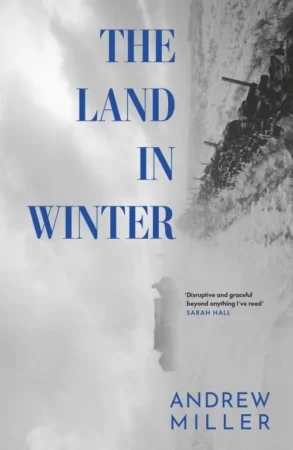
The Land in Winter
Andrew Miller
This book is completely misadvertised, it is not about 2 families struggling to survive a particularly cold winter. Yes it is set there, but it is really about an affair and as the publisher puts it, the minutiae of life, what a riveting topic the minutiae of life is. Just say it’s lacking in substance.
This longlist is so bad it is impacting upon my reviews. Nothing of note happens in this book, at some point there’s a blow job and at another point a boy is instructed to hit the crap out of a car with a cricket bat while the driver is held up at bow and arrow point. It’s 365 pages long and what Andrew Miller does with the other 360 pages is beyond me.
This is what happens when you try to be Claire Keegan but you have a fraction of her talent, can’t write prose, fail to create an emotional connection with your characters and include a completely unnecessary 260 odd pages in your novel.
The characters in this novel are not even remotely constructed, I know I’m repeating myself in these reviews - but a character is more than a name, age and job title. In this novel it’s also about if their downstairs ugly points inwards or outwards. There are 4 characters in here, and honestly, I couldn’t tell the women apart. I don’t feel like the men are that dissimilar either, but the women, next level bad. Don’t think I’m criticising Andrew Miller for being one of those authors who can’t write women and can only write men, he’s got no talent at writing either.
And for a novel that is meant to be about a cold winter, it doesn't build a setting either. Which is weird, because most of this novel is descriptions of one thing or another, but there’s no substance, all the descriptions are side notes. It’s like if I randomly started talking about the texture of hummus in this review, you’ve come here for a book review, not to find out that the best hummus has lots of garlic and ice added in the blending process. I’m just including that to make you think there’s something of substance in this review. There’s only so much you can say about a novel that is low on plot, characterless, settingless and themeless before you start pondering the virtues of hummus.
I’m not sure if the prose is the best or the worst element of this novel, it’s pedestrian and lacks focus, but it’s clear that the most effort has been included in this aspect of the novel.
Let’s take a break from this relentless negativity and talk about one of the few books with merit on this year’s longlist.
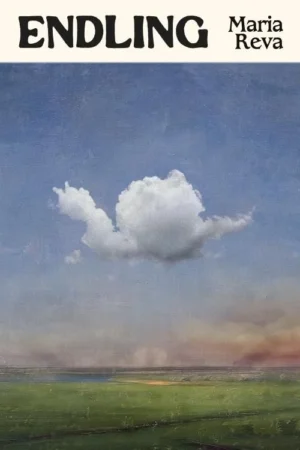
Endling
Maria Reva
This is a bizarre novel. Yeva is a snail scientist with a mobile lab, hunting the countryside for rare breeds of snails. She funds her research by dating men, making use of Ukraine's marriage industry that attracts men who think they will find a submissive traditional wife. Yeva has no intention of ever marrying one of these men, not because she’s a feminist or anything like that, but because she’s asexual and interested in snails.
Sisters Nastia and Sol also work in the marriage industry, daughters of a famous protestor against the marriage industry who has gone missing. Nastia convinces Sol to join her on a stunt, the kidnapping of 10 bachelors looking for love. The only issue is that to kidnap 10 men they need a large vehicle, and hence they ask Yeva to join them.
One of my favourite bits of this novel is the seriousness that the characters take some of the absurdity Reva introduces into this. Upon being asked to join in the kidnapping of 10 men, Yeva asks if they’ve done a proper risk assessment and requests the paper work, it’s not until Nastia submits the correct paper work to her, that she agrees to join the stunt.
Pavel is one of our 10 bachelors who are eventually kidnapped. Instead of dreaming of taking a Ukrainian bride home to be his wife, he dreams of moving to the Ukraine to be with his new submissive trad wife.
Lefty is a snail whose shell goes the wrong way, Yeva, complete with kidnapped men and angry activist women in tow, wants to find Lefty a mate, and when one is sighted everybody’s plans start to go wrong.
I am sure this was going to be a very good farce novel, funny, sarcastic, making commentary about how westerners view other countries with rose coloured glasses… Then Russia invades the Ukraine, and Reva includes that in her novel. It becomes the focus, it’s quite jarring and honestly it wasn’t my favourite thing, but it represents how jarring war is, how suddenly things change, how meaningless a lot of our struggles are in the face of war.
Also, there are the kidnapped bachelors, who need to be informed of the war, and who by this time have figured out that this is a scam to steal all the men’s mobile phones. The commentary on facts and misinformation with these men is priceless, having been convinced that they’re victims of a phone theft scam, everything they see is suddenly easily explainable as part of that universe. At one point Pavel escapes and sees dead bodies and conflict and becomes convinced that the war is actually taking place - when he returns, the men ask him what is actually happening, seeing that the men are so convinced and would take him as on the side of the women if he said it was a real war, Pavel lies to the men to keep their trust. If all of your mates think covid is a hoax, is it just easier to go along with them and not rock the boat? This is priceless, I have been Pavel, who hasn’t had the realisation while talking to somebody that ‘they’re a fool’ followed by the thought, ‘but I’m at work and don’t want to create conflict, I’ll just nod along’.
There’s quite a lot going on here and then Maria Reva introduces herself as a meta character, which is extra weird as surely Yeva is at least inspired by her. Suddenly there is a need in the plot to evacuate Reva’s real life grandfather and scenes are repeated with different characters. This is a repeat of Kitamura’s questions around what is a character in a novel, it is experimental writing asking the same question - but it is done better than Kitamura, it is less jarring, even as you go into this wackiness.
It is very telling of the overall quality of the longlist that the two novels that question what a character in a novel is, with the exception of Love Form and the as yet unreviewed Seascraper, the best formed characters on the longlist.
Plotwise this book is really quite a bit of fun, best plot on the longlist, which is a little like saying it didn’t step backwards when asked to volunteer, but nonetheless I enjoyed the plot. It is a novel not taking itself too seriously, but at the same time providing a serious analysis of important and sensitive issues, questioning the way information and news is broadcast to the West.
Personally there is a little too much going on, and I would have preferred a little more focus - but this doesn’t distract from the overall quality of the book. I don’t think the original plan was to include the war with Russia in this novel, but Reva started writing this before the war, and that creates so rabbit holes of thought, the emotional ones about things like having your grandfather stuck in a warzone, the meta ones about the impact of world events on writing a book, or the question of what happens to other issues in this time?
A really exceptional book, and a perfect book to read with somebody else or for a book club. This was my patreons book club choice for July, so I will take this chance to thank them for their support. But, it’s a really good novel when people can take different things out of a book, when you discuss what people saw in it, you learn from their reading and it adds to your experience. For me that is the ideal book club novel, a book that gets better after it has been discussed, and Endlings is certainly that book.
This is the only book on the longlist that I think has the quality to win a best book of the year award. While I think the judges need to apologise for this longlist, they can make things a small bit better by announcing Endling the winner.
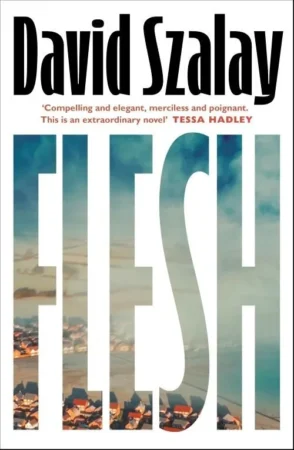
Flesh
David Szalay
A cradle to grave story about Hungarian Istvan, who for much of his life moves to London.
A married woman about 40 asks Istvan about 15 to help her with her errands, and you know how these things happen, they have sex. Really mechanically and emotionless sex, actually it’s clearly not emotionless, that’s just the prose.
If you’re going to include a sex scene, make sure you can write one.
This whole affair is written so matter of factly, you would think it’s an everyday occurrence. We never find out why this woman seduces Istvan, and maybe that is forgivable because she is not our narrator, but frankly we don’t really understand what Istvan gets out of it either, he’s actually repulsed by her to begin with, although by the end of their affair he has definitely changed his feelings.
This is just the beginning of the book, and she is just one of several women all about 40 that Istvan has sex with over the years. The sex scenes are really really bad, there’s so little going on, it’s the on the page equivalent of starfishing it. I’m sorry I can’t get over it, this book would have been considerably better if they were fade to black.
The sex is like a metaphor for the entire book, it would have been better if the entire book was fade to black. No, that’s actually unfair, but we don’t get emotion from Istvan at any point in this novel, with one exception, when our initial woman breaks up with him. This is the only time Szalay lets us feel what Istvan is experiencing. Later in this novel some pretty massive things happen to Istvan, but it’s kind of like the man who turns away at a funeral so you don’t see him cry.
I am being pretty unfair here, this is a novel about the difficulties of articulating and expressing emotions, the clumsiness of feelings and the fraughtness of masculinity. Of course the emotional writing is stunted, that’s the point of the book… I am however bored of male author writing about the struggles of masculinity, men if you’re struggling with masculinity, here’s all you need to know, stop worrying about being a man and start trying to be yourself - you don’t need to identify as a man if you don’t feel that fits you, that’s probably taking things a bit too far at this stage, but seriously, if you’re struggling to be a man, it’s either because you’re not one or because your definition of a man is skewed, biased, incorrect or in need of updating. Stop trying to define masculinity by what you think other people think it is, and just be yourself and If you’re struggling with this, do yourself a favour and go to therapy.
The themes don’t work with good character construction or even a good reading experience, if you’re going to write such a novel I think you need to figure out how to get over such an obstacle. I’m not saying Szalay is a bad writer, I’m saying he hasn’t challenged himself to do a good enough job.
Character and prose wise, this is a complete failure. The Setting doesn’t come through in the slightest - but the plot is alright, B+ for the plot.
Because Szalay has a good reason for not being vulnerable with his characters, I was more forgiving of this when I was reading it, and despite the negative review, I did not hate reading this book. I thought it was neither good nor bad, but bland.
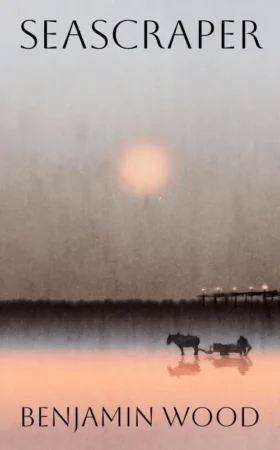
Seascraper
Benjamin Wood
Thomas is a young man, a shanker, scraping shrimps up off the sea floor with the help of his horse and the tide of the ocean. He lives a simple life with his mum, a woman in her late 30’s, who has no shortage of gentlemen admirers.
He was taught his trade by his grandfather, and has never known his father, an English teacher who died in the war, and a man hated by his grandfather for getting his daughter pregnant at 15. Thomas pines to be creative, read books, sing, play his guitar and he pines for Joan down the road.
Coming home from a hard morning’s work, Thomas finds a man, an American film maker, who wishes to make a movie and thinks Thomas can show him the beach. For his services Thomas is offered 100 pounds, this novel is set in the 60’s, that’s actually a lot of money.
I thought Wood’s prose was lovely, easily the best prose on the longlist. It is Wood’s prose that helps instill the setting, little words and turns of phrase, placing this very much on a Northern English Beach, away from the big city. The time is created with mention of Henry Fonder, the use of a horse for both transport and trade, and the conflict that creates, kind of like a fax machine or a landline telephone today, close enough that we understand what they are used for and distant enough to be weird to use.
This is what this book is, atmospheric and beautiful… But it’s not all the qualities this book has, Thomas is a simple character, but he is well drawn. He’s a young man, gritty, hard working, you can see the hardness to him, but also Wood’s adds a softness too, his love for folk music, his curiosity about his father, his crush on his friend’s sister Joan. This creates the turbulence inside Thomas, it’s almost like his identity is at battle with itself. There is who he is and who he wants to be.
There is also a longingness for a friend, Edgar, our American filmmaker. This friendship takes some unexpected turns, but how Thomas reacts to them is character defining. Thomas’s reactions show both his faults and his virtues as a human, not as separate aspects, but as existing within the one action.
This is a novel about our connection with our pasts, be that parents, trade or landscape. It’s about the internal battle between creativity and practicalness. And I enjoyed how these themes were explored.
I could have done with a bit more plot and a bit more complexity to the themes. This was the last novel I read from this longlist, and I didn’t have high hopes going into it, but this really is one of the few bright spots on this year’s longlist.
One book to go and it would be nice to finish on a positive note.
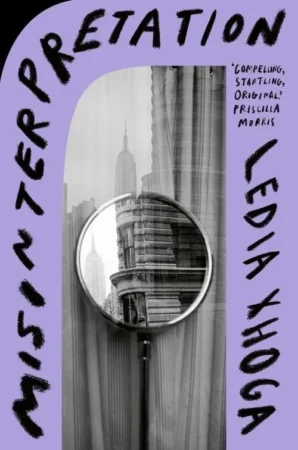
Misinterpretation
Ledia Xhoga
And as nice as that would be, it’s not going to happen. This is another really poorly written book, lacking depth, characters or emotionally connective writing.
This is a real contender for the worst book on the longlist. I said when the longlist was released, I thought this book’s inclusion was a joke and I’m still waiting for the punch line. It’s my pain isn’t it?
An Albanian interpreter takes on two clients who cause her some trouble, a woman who is fleeing from somebody’s, her ex-husbands cousin or something like that. The ex-husband is paying him to follow her. And a man who needs to go to therapy and his experiences draws up feelings and memories for our interpreter.
This actually sounds like my kind of novel, so what is it I didn’t like? It’s the same thing a French Nobel didn’t like about their revolution, the execution.
Unlike the execution of a French Nobel this is mundane, it meanders, it's slow and uncertain. I’m going to continue to flog this metaphor, much like the execution of a French Nobel, there’s a lot that could have been cut out, but sadly wasn’t.
After a trip to Albania, our unnamed narrator questions what’s real in her life, and we’re left to question if she's real. She’s not, she’s a character, well lah-de-dah. I swear if I read another book thinking that’s an interesting topic after this longlist, I’m going to wish I was a French Nobel.
Our narrator is having trouble with her mental health, I know that because I was told - but what exactly is the trouble? We’re neither shown or told, that is indeed the point, it’s not by accident she is drawn so poorly, it’s intentional. It’s because she acts as a conduit for other characters to talk.
Authors, if there’s one thing I want you to learn from this longlist, it’s this. If you have an idea about how to express the ideas you're exploring, and it makes your novel shitter, don’t include it. A book consists of a plot, some characters, a few ideas to explore, a place and the words you put on the page. Try to do all those things well, just try, if you get 4 out of 5 it will be a good book.
What am I the reader going to learn about our narrator's struggle with mental health, when I don’t even know what she’s suffering from, when I don’t have an example of how it impacts her life - because in your foolishness to make a point you think your novel benefits from minimising a character. If she’s so minimised, why do I know her pronouns? She comes through too strongly to just be a reflection and not strong enough to explore the themes in the novel. It’s making a book worse, for a pay off that is poorly written and doesn’t work.
This is an utter mess of a novel, and it’s so risky, it doesn’t have a protagonist, the plot is nonsense bordering on the surreal. I assume this is set in New York, but really it could be any big US city. There’s no safety net if the risks taken don’t work, and they don’t work.
On top of this there are several things that make no sense, the husband is so worried about the wife he asks her to lock all the doors and windows and then leaves her for nights on end, WTF? I know they were fighting, but, really? Also, what the hell is it with him and the door in that scene? Then they accidentally link in with some mafia linked person and ‘disappear’ somebody, without meaning to.
Utterly terrible on many levels.
This is easily the worst Booker longlist I have ever read, it is so bad I would like the judge to come out and apologise for this. I’m not even joking. I would really struggle to make a longlist this bad based off all the books I’ve read this year, then to find something nice to say about each novel.
When the judges were announced I was excited, Roddy Doyle, Ayobami Adebayo, Kiley Reid, 3 authors who have produced books I love - just goes to show, just because you can write a book, doesn’t mean you can judge on.
Overall the books are sparse, dull, really dull and challenging the necessity of characters being part of the narrative. It’s an experimental group, but with a few exceptions there’s not a lot of challenging reads, it’s a collection for insomniacs, not people who want to learn. Collectively the themes were a complete mess, underexplored in basically every book except Endling.
The best surprise for me was Seascraper. I also really enjoyed Love Forms, but that was less surprising because I knew it was a book I would enjoy. These were the only books on the longlist that were successful in creating characters.
I found Audition thought provoking and I enjoyed that it was experimental but also kept two very traditional narratives.
I don’t think a single other book is worthy of the shortlist. If it were up to me, that would be the longlist, Audition, Endling, Seascraper and Love Forms - But for me clearly the next best book was Flesh, it’s not as bad as I reviewed it, I maybe got worked up with the trash around it, it still isn’t a good book, but I would piss on it if it were on fire.
Picking a 6th book for my shortlist is difficult, and I’m not going to do it.
As far as winning goes, it basically has to be Endling. It is not just one of the only entertaining books on the longlist, it is artistically head and shoulders above anything else on the longlist.
In 2017 an unnamed Chinese man suffering from Hirschsprung, had a 30 inch section of his colon removed, which weighed 13kg, he has been constipated for 22 years. Now that I’ve finished this longlist, I think I can empathise with the relief he felt.