


Watch Scott’s video on YouTube ↗
Another year’s Booker Prize, another longlist read, but was it a good longlist or a bad longlist? The answer to that question is undoubtedly, yes it was. There’s some real captivating, thought provoking and playfully challenging fiction on the longlist, the sort of amazing novels we associate with the Booker, but this is tempered by some really dire uninteresting novels, that I would call rigid, but clearly have the flexibility to stick their own head up their own exit hole, the sort of boring pretentious novels we also associate with the Booker. This was a longlist that was both the best of Booker, and the worst of Booker.
So allow me to be your Booker canary. Review each book, predict a shortlist and winner, look foolish when the actual shortlist and winner are announced and give you some final thoughts.
I need to put a disclaimer here, because I always get a bit of push back with this video every year. I’m going to praise books and I’m going to criticise books, and I’m going to do it with a lot of hyperbole, maybe I am exaggerating it for comic purposes, but this is who I am. If I say a book was so bad I wanted to stab my eyes out ala Oedipus, I’m not actually serious, I was probably listening to the audiobook.
When I say a book is bad, I’m not actually saying it’s bad, I’m saying, I don’t like it, this is what I didn’t like about it, and then I’m going to compare the authors creative process to somebody who attempts to gaslight victims into volunteering to be cannibalised. If that offends you, then I’d suggest you’re probably reading the wrong longlist.
Before I get into the reviews, I want to thank the Booker prize for the changes they’ve made this year and over the next two years, regarding the dates of announcements and eligibility.
Previously I would have had a lot of difficulty getting the Emma Cline and Marlon James books prior to the shortlist being announced and I’ve been able to do that this year, due to the shortlist date being pushed back. Then the eligibility dates change for the next two awards, being that books with a later release like Emma Cline’s and Marlon James would be eligible for the next year’s award. It’s a wonderful, fan first tweak to the prize, and as somebody who was vocal in criticising the eligibility dates and shortlist dates in the past, I want to make sure I’m just as vocal praising these changes, and any institution not afraid to make small changes like this to their constitution.
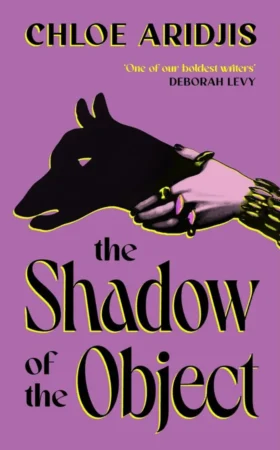
The Shadow of the Object
Chloe Aridjis
Returning from London to Mexico, Flora is bitten by her family dog and ends up in hospital and it is there she meets Wilhelmina. Wilhelmina is an old charismatic German woman, the type who playfully abuses nurses because they won’t let her have a cigarette. It is Wilhelmina’s love of magic lanterns that gives this novel its title, the name given to an early type of image projector that Wilhelmina loves and collects.
I enjoyed Wilhelmina as a character and the friendship she formed with Flora, our protagonist. Wilhelmina is a bright charismatic character, the sort of figure who makes other people interesting just by standing near them. The second part of the novel is set in London where Flora meets Wilhelmina’s son Max, and in the absence of Wilhelmina we come to terms with the complete flatness and passivity of Flora. Max lacks any of the fun traits of his mother, and as a result what starts off as an interesting novel really fizzles out into anonymity… And I think that’s kind of the point, this novel is called the Shadow of the Object after all, and Flora is certainly much brighter surrounded by the flame of Wilhelmina’s charisma, while she is dull and boring surrounded by max, but what a terrible way to demonstrate it? It’s not that she’s brighter in Wilhelmina’s presence, it’s that the world she lives in is duller without it. What is an engrossing read in the first half of the novel, becomes a tedious chore as the novel wades on into nothingness.
The themes in the novel are a blending of the obscure and the cliche, things like the joy of an object or possession, are balanced with conversations around memory and mortality. I don’t mind a few thematic cliches either, they’re cliches for a reason, the question is not, is the theme interesting, it is, is the theme well discussed, is it saying something new or being examined in a new way.
Flora is a silver polisher, somebody who cleans the stain of the world off objects, while Wilhelmina’s obsession with magic lanterns shows us a lady interested in the stain objects place on the world. The trouble is that there is really no depth in the thematic discussion, there was a lack of inspiration, I didn’t care to look things up when they came up, and I wasn’t challenged or provoked by the discussions in the novel. I didn’t find the themes around objects, memory and shadows particularly interesting to begin with, but surely it is the role of the novel to show me why these themes are interesting, after all, I wasn’t particularly interested in Wilhelmenia when we first met her, but I soon found her enchanting.
What this novel lacks thematically is the rigorousness of discussion. This is a problem not just with this book, but with a lot of books on the longlist, the other 5 books will become clear as this video progresses. Let me give you an example to show you what I mean.
Quantum entanglement led to Einstein calling it spooky action at a distance, and is an example of quantum mechanics and relativity contradicting each other, however a recent discovery showed adding an extra temporal dimension to the mathematics can resolve this difference between the leading theories of physics. What I have just said is interesting to some people, it’s very intelligent, and it’s largely true, but it’s a headline, a factoid, trivia, a subject to bring up around a dinner table. I haven’t made you more intelligent by saying it, the best I can hope is that you think, oooh, that’s interesting, I’m going to look that up. Mentioning a topic is not the same as discussing it.
The quirky and the unusual shouldn’t be used to hide thematic flatness. But too often on the Booker longlist, this is what’s happening. And it’s really a little unfair to this book to bring it up in this review, because I’m going to come back to this again several times in this video and this is the worst example of it, this is the best book of the thematically underwhelming and unexplored novels.
Plotwise this novel is a disappointment, not that it’s a novel that should be judged on its plot. However I feel like the plot is a metaphor for everything this novel does. It's there, it’s not entirely horrible, but I can’t help being disappointed.
If however the part of the novel taking place in Mexico was the entire novel, a short story or novella I guess, then I would have enjoyed it. A random encounter on a holiday leading to a weird friendship, two women sharing things, one providing a bread roll, the other a magic lantern show. That’s examining human connection and friendship, the 2nd part of the novel in London makes me wonder if everything I saw and enjoyed in the 1st part was there by chance.
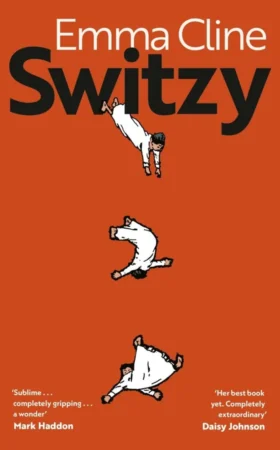
Switzy
Emma Cline
David is our narrator of this novel, a very rich man who is suffering from terminal dementia, Amyloid Plaque. The name of the illness doesn’t really matter, Cline is able to so completely immerse us in the experiences and the confusion of a man struggling with his grasp on reality, she took a character who my initial reaction was, do I really need to read about the struggles of a billionaire, I flat out hated him and she made me sympathise with a character in this situation, not by giving David an interesting character arc, but my fleshing out his character and helping me understand his position. Emma Cline made me care about a character I hated, not by changing the character, but by changing my opinion. For that alone this is a very good book, but it’s not that black and white. Also, does the name not really matter, David mutters “I hate you Amy Lloyd”.
David aboard his private jet is flying into London, a stop over where he will visit his daughter Rebecca and his grandson, before flying over to Switzerland, where his journey will terminate, both literally and metaphorically. He will be accompanied by Cody, his assistant, a man with both endless patience and endlessly frustrated by David’s requests. Cody tells David they are cleared to land at London City airport, David insists they land at Heathrow and that as they are preparing for landing Cody radios heathrow and get them booked in to land as it is better. Later Cody organises for David to leave his room key with the concierge before they go out for dinner, only for David to forget he has done that, and demand Cody make a scene at the restaurant as the waitress has stolen his key. Cody, visibly frustrated in these situations, handles them as I have done when I have cared for people struggling with reality, finding ways not to contradict David, without insisting on his errors. Speaking to the staff out of David’s earshot and then telling David that “the manager has sent your key back to the hotel already.”
Cody is an interesting character, at some point later in the book his partner visits them, and I was surprised to learn that Cody was gay. Not that it was a revelation, but that I realised I was only getting David’s point of view, and he for all his dependency on Cody, didn’t really care for him and his life, so when I discovered that Cody is gay, I wasn’t so much surprised he was gay, but that he had a sexuality at all, I asked, what else don’t I know about Cody. He is very patient and very intelligent in his handling of David, but, his personality away from David is not visible to us. So often Cody is called The Boy by David I began to mentally picture 3 people on this journey and not two. Cody may or may not be calling himself Cody Hastings, and passing himself off as David’s son, David is definitely paranoid about Cody stealing from him, but when we are presented with a hint that David may actually be correct, David doesn’t see Cody as a human enough to investigate the clue, instead he sees his belongings.
It is not just Cody who David struggles with, it is his daughter Rebecca, his enduring memory of her is a school assignment she did, where she researched where they lived, listing their address, then the USA, then the Earth, the solar system and continuing out. David doesn’t remember the name of Rebecca’s child, his own grandson, calling him the child’s child. In David’s school friend Tom, we have the first hints that David was bisexual, making it even more mysterious that he didn’t see Cody’s sexuality, but there is a cruel past, an event that has separated them and an event where you see David has regret from his role, but, why has he waited until he is in the final stages of his life to apologise for, this happened at boarding school, and David hasn’t kept in touch with Tom enough to know Tom’s sister passed away when they were all still young.
Cline gives us a key to understanding David’s relationships with other people, in London he meets a woman at a bar, she helps him up to his apartment and stays, asking if she can take a bath, David acknowledges he is being seduced, but mentally he concedes to his illness with the line, “I no longer desire my desires”. A man who spent his life building up a staggering fortune, but who is left with a best friend he hasn’t seen for 50 years, a daughter who lives in another continent, a grandson he doesn’t know the name of and I haven’t mentioned Annabel yet, a wife he hasn’t been married to for many years. David no longer desires his desires, he no longer craves money and possessions, he craves connections, but the people he reaches for that connection with are not interested in him, meanwhile he is undergoing this final journey with a man pretending to be his son, a man looking after him, a man worried when he disappears, and a man who David concedes, he doesn’t know what will happen after David dies.
I’m so impressed with how Emma Cline manages to draw my sympathies towards David, yet manages to be so critical of him and his life. She is a very talented author who trusts her readers, and I just feel so rewarded by this book. I’ve been aware of Emma Cline and the hype around her novels, but I’ve never read them before, and if this brilliant book is a sample of her skill, well I can’t wait to read some of her back catalogue.
A book that really balances the best parts of emotional literary fiction with intellectual literary fiction. I loved this book and it is the first of a few I’m going to label as a potential winner.
Helen of Nowhere
Makenna Goodman
Never before has a book’s title so accurately doubled as a review.
A disgraced and divorced professor is shown around a house by a realtor, who imparts the history of the house and of the previous owner Helen.
Fitzcaraldo has a reputation for publishing intellectual novels that don’t always have a natural home among the large publishing houses. They are a publisher unafraid to take risks. This all means for every Cold Enough for Snow, for every Still Born, for every Drive your Plough Over the Bones of the Dead, there are two or three novels that don’t work. This is the price of a publishing house that is unafraid to take a chance… But this novel is garbage, complete and utter garbage. I don’t wonder why this book was on the booker prize, I wonder why this book was published. This is not the book of a publishing house afraid to take chances, this is a book of a publishing house that doesn’t care what it is putting out into the world, it is the literary fiction version of pulp fiction.
Let’s actually go through what is wrong with this novel, and not fall victim to having the same level of substance as this book.
There are four different monologues that make up most of this book, none of which have a different voice. The book itself is trying to invite you to examine who is writing it and maybe the lack of difference in the voices is intentional inviting the reader to examine the basis, unfortunately it is done at the expense of character development.
The novel itself is exploring the idea of stories and how they’re re-written, the titular Helen is clearly a reference to the face that launched a thousand ships, a story that has been retold and rewritten, she is both at fault and a victim in various retellings of the Trojan history. This is similar to how our problematic professor is a victim and at fault.
Our professor is a man who lusts after his wife, before she was his wife, when she was his student and when her career overtakes him, when she betrays him and takes the other party's side in a work dispute and when she leaves him. There is something that brings up elements of disgrace by J.M. Coetzee, a novel that while quite brilliant, is an acquired taste, it is however Disgrace is a novel that places importance on the drawing of relationships and characters, and I really have to wonder why Makenna Goodman didn’t do that? Is it a lack of ability? Or intentional, to drive the focus on the reaction of the scandal, towards moving on? I really tend to think it is the former, we do get a little of the shifting power dynamic of the relationship between husband and wife, it’s not enough to understand their relationship, we can’t see if the betrayal of the wife was intended when she was reassuring her husband or if she discovered something and changed her mind. Other than knowing that his wife is younger than him, that she has surpassed him and that he thinks she’s sexy, I don’t know anything about her and the constant conversation around their sex lives is wankiferous. This feels like a woman, writing a man, who can write women.
This is not a book with a plot, the characters are not drawn, there is so little attempt to create them. Thematically there isn’t a lot here, other than the question of bias and storytelling, which is a completely pointless theme without other themes to interact with, the metoo stuff doesn’t work without an extra perspective, and it’s just all so cringy. Thematically this is as boring as the plot. It is a 168 page novel that is padded and slow. The prose is the best element in this novel, but there’s nothing beautiful, efficient or that lends itself to the setting, it’s obtuse and overwritten. In every element this book is an abject failure. It even lacks the flexibility to be adequate emergency toilet paper.
Just to tease you a bit, I did finish this novel, and there was one book so poor I couldn’t finish it. Even of the books I finished, this was not the worst book. The worst book was undoubtably
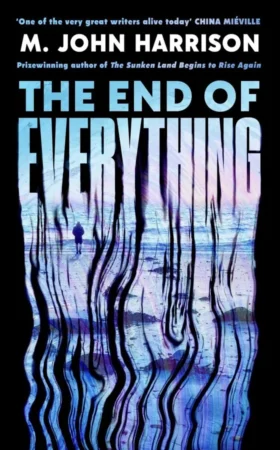
The End of Everything
M. John Harrison
Never have I taken so little from a book as this. This is not a bad book, this is, I think it’s not an exaggeration to say, the worst Booker book I have ever read.
This is a dystopian novel bizarrely begins with a woman capturing a 14 year old boy because he was urinating on her house, she then ties him up, severs his femoral artery and watches him die. This didn’t seem right to me, but I’m always happy to let an author be weird, controversial or whatever it is, to build their world and see what they do with it, the bizarre thing was the communities response to it, the father comes over and talks to her, saying he thinks it was a small overeaction. What? I was thinking, maybe the kid is coming back to life or maybe its an online simulation or something weird is happening that I don’t understand. No.
Instead we start to talk about the iGhetti, who appear to be some sort of aliens that are taking over London, but what they physically are is never really explained, instead the i at the start of the name leads us to think they’re related to Apple or at least technology and the mention of a Britain no longer attached to Europe conjures up some sort of Brexit commentary, but this is exactly what I mean when I mentioned in the Shadow of an object that you can’t just bring up themes and leave them, AI and immigration are the themes you do the rest. Look at that, I’ve saved you 200 pages of utter nonsense.
Plotwise this is a complete mess, events don’t progress things, then there is a seeming urgency to things without reason. The characters are forgettable, ill built and lack even the complexity of a James Patterson creation, Harrison despite not bothering to create his characters can’t even colour in between the lines when he discusses them.
Thematically this is one of the only books I have come away from stupider than going into it. There is no substance, no discussion, no observations, and for a novel that is clearly meant to be very critical of modern times, it is incomplete in its discussion, most 10 year olds will see more complexity in the world than this book, it doesn’t try to propose a solution or make an observation that isn’t completely obvious, it lacks characters to empathise with, and the metaphors are clumsy and clunky. It is a real scrambled egg of a novel, confusing everything into a benign uniformity.
This is like reading James Joyce and figuring out he really is just talking about his cow. This is uninspiring and dire. The judges need to realise when a work of art should be stuck to their fridge for a week and when it should be longlisted for literature's most prestigious prize. What a complete and utter joke.
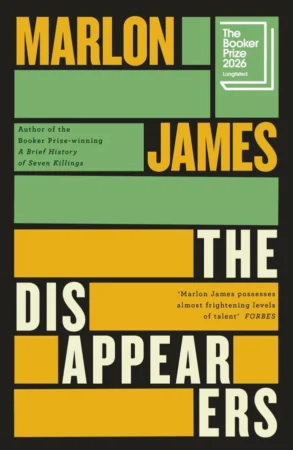
The Disappearers
Marlon James
I think this is a novel worth reading, then researching and then reading again. At 640 pages, that is quite a commitment, and more so given the uncompromising descriptions of violence and hatred towards gay men that are abound throughout this novel and one that I acknowledge is also hard to do in light of how many amazing unread books we all have left to get to, but also, a book that if you find the time to do this for will be richly rewarding.
This is a novel centred around a 1988 Kingston performance of Fortune and Men’s Eyes, a 1967 John Herbert play, essentially about the lives of four queer men in prison and exploring homosexuality and sexual slavery. The men performing the play are subject to a brutal attack, in which one man dies and two men Matt Chin and Orrin Turner disappear. Matt and Orrin give our novel its title, not because of who they were, but because of what happened to them.
There are a couple of themes that I think are pretty obvious to any reader, homophobia, fear and hatred of homosexuals, AIDs. If a novel is based in Jamaica in the late 80’s and these themes are not explored, you have some questions to ask, however Marlon James is exploring themes of domination and power, both within a sexual relationship and in a societal relationship. Many of the men involved in beating up the out gay men, were also gay. This theme is one of the reasons why I think researching and coming back is beneficial, as this is a central theme of Fortune and Men’s Eyes and it’s no coincidence that Marlon James is exploring it here.
The novel is broken into 5 parts, The Play, The Blackjacks, The Disappearers, The Exile and Return and The New World, each told from the point of view of a different protagonist, and this is where my personal issues with the book begin. Before I criticise this book, I want to make sure my opinion isn’t in any way hidden by my criticism, this is a very strong, and a very good book. I read this novel at a point when I wasn’t 100% healthy, I had a few bad nights of sleep and I believe this impacted my enjoyment of the book considerably, but the five narrators bleed into one another. They read too similar, and this isn’t an issue I have had before with Marlon James and to be honest, I couldn’t tell if this was a device used to demonstrate the similarities between these men, or if because it was written in such a strong Jamaican pathos, that my brain not being at 100% struggled to identify differences between the various narrators.
Matt and Orrin’s disappearance is at the centre of the novel, both figuratively and literally. We start to see characters not remembering which man was which, we start to see the search for this disappeared wane, yet it is the lack of resolution to this issue itself which hangs over the rest of the book, remains would mean an ending, but could they have run, changed their names, what has happened to them? Did they even exist in the first place? Dead or with a changed identity, the thing that has disappeared is the gay man, regardless of if the men themselves survived.
I thought it was very clever how James allows the title of the novel to accumulate meaning as the novel progresses. The hidden gay life of a Jamaican man, the men who literally disappeared and then AIDs, the men who would disappear. Another theme that James comes back to is the fine line between pleasure and pain, his sex scenes involve things like tugging on testicles just to the point where it cannot be tolerated, the pain and the pleasures of penetrative gay sex, while this is explored in a physical sense, this is explored in relationships, with one of the victims of the attack becoming obsessed with one of the men who attacked them, pursuing a relationship with him and it became so hard to tell if this was in some way an act of revenge, an attempt to turn a point of trauma into something more, an attempt to get close to a man to ruin him or just horniness.
The inclusion of gay men in the Blackjack gang who killed, maimed and disappeared the players, is an interesting twist too. That a man can hate his own identity so much that he would kill others and later that he would have so little recollection of the men he brutalised, that when one of them seduces him, he doesn’t recognise him. Why is he doing this, how does he really hate?
The chants of the Blackjack men “Batty is not pussy”, echo through the book, but I couldn’t help but to see two things, the men in this novel were doing far more than playing with each other’s batty and the women in the novel also had a batty. It was such a simple chant of hatred that didn’t make sense once examined, but also, there were gay men killing gay men, it was never that simple.
I’ve seen this called a masterpiece, the best book of the century, personally I have pointed out that I have had a few issues with it - I still rate this book really highly, but I struggle to see the calls for this being that exceptional. For me, it’s not even Marlon James’s best book. I rate both The Book of Night Women and Brief History of Seven Killings as better novels. It’s not the book of the century, but it is a very strong book, from one of the most talented authors of his generation and surely that’s enough to make you want to read it. I do think I see a potential winner here, even if I don’t rate it as highly as some of Marlon James other works, it is certainly worthy of both praise and recognition.
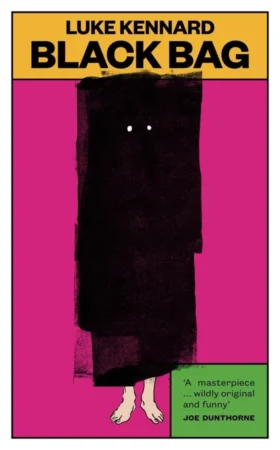
Black Bag
Luke Kennard
Going into this book, I was a little worried, it is a novel about a man who wears a black bag, it sounds like a pointlessly kooky novel… and I’m not 100% sure I was wrong, but I’m also not sure that matters.
My first impression of this book was to adore Kennard’s prose. I finished reading this after reading another book on the longlist with incredibly stilted and generally very poor prose, and this was a balm. Luke Kennard is the type of author who can write a shopping list and make it sound good. The next thing I noticed was the wit and humour Kennard writes with, this is not a comedy novel, but it is a funny book. There are plenty of authors who became very successful with nice prose and a piece of wit, PG Wodehouse springs to mind, although this is definitely no Jeeves novel.
A struggling actor applies for a role at a university, where he will be required to wear a black bag, sit in the corner of a lecture and not interact with the students in any way. Given that is the premise of the novel, I don’t think it should be a surprise that our protagonist is nameless, this after all is a novel that is exploring the role of identity on our protagonist's various relationships.
The experiment is run by Dr Paul Blend, a character who for the most part is absent from the novel. Instead a rival professor, a woman called Justine, begins to interact with our protagonist, proposing her own experiment, a relationship where she never sees his face, he leaves the bag on. In what does feel a little cringey, Justine proposes that the relationship be sexual, but if the relationship is to be sexual Justine has to propose it, our protagonist is ultimately a very passive character, or at least he is when in the bag and this cringy proposal does however lead to some very silly sex scenes, our protagonists arms are still in the bag, he struggles to see out the peep holes in the bag and several of their acts result in damage to his face.
I couldn’t help but see Justine’s action as a commentary on the meddling of academia, every time our protagonist saw her, I felt like he was about to get busted. Dr Blend also gives our protagonists large chunks of money, stating how little academia pays. I would be very unsurprised if Kennard was an outspoken critic of issues that exist within academia.
The central experiment of this novel is something called the Mere-Exposure effect, a phenomenon where people develop a fondness for things simply due to proximity and familiarity with them. This is a real world phenomenon and has applications all over the place, it explains why we like celebrities we have never met, and why 50% of you continue to return to this channel despite not subscribing. While Justine explores the physical side of this phenomenon, it is Claudio who explores the advertising side of things.
Claudio is the best friend of our protagonist, a chancer who has made a small fortune streaming computer games online and generally saying weird shit all the time and who lives close to the university allowing our protagonist to get changed into his bag, however he is convinced that Black Bag should be monetised, creating bag coin. A concept that still doesn’t make a lot of sense to me, but I think that’s the point.
Claudio also offers moments of dark humour that are deeply satirical. At one point he suggests creating a website dedicated to the leaking of nudes, in order to combat the rampant leaking of nudes, arguing with a degree of pragmatism that is hard to argue against, that the leaking of nudes will always be a problem so long as there’s a market, so the only solution is to bomb the market by leaking everybody’s nudes.
Claudio is that friend our protagonist has been friends with since they were at school together, and who has grown somewhat problematic, with different values, some of which are more confusing than actually problematic - but through this relationship we are exploring an example of Mere-exposure we almost all have, those friends we’ve had forever and who we would in no way be friends with if we met now, but who we nonetheless count as our closest friends, even if they believe the solution to sex crime is more sex crime.
At one point Claudio gets into the black bag due to our protagonist having an illness. I love the questions this throws up, will he be noticed? The only thing visible when where the bag are the protagonists legs, Justine correctly identifies our protagonist is a caucasian male of average height, and these are things that Claudio is also. But even if he meets those things, what else is important to the identity of Black Bag? Will Claudio sit in a different seat when attending the lecture, walk in with more confidence or a different gait? And who is going to notice, how much of our identity is self imposed and how much is due to the crowd identifying it? The one person who does notice Black Bag is not his usual self is Justine, but even then, there is no assumption of Claudio being an imposter, rather the assumption that Black Bag is out of sorts today, maybe he’s sick. The interaction between Claudio and Justine is told to our protagonist from Claudio, but Claudio doesn’t come across as the most reliable human, is he a reliable narrator? I tend to think he is, but even the questioning of it, brings up how identity is shaped by our stories.
Kennard then introduces us to other Black Bags, allowing us to consider group identity, fitting in and this is an inherently male issue in the novel, we are questioned how men fit in, the need for male friends and the problems of male isolation, especially when we have a collection of men who don’t fit into our stereotypes. None of the men being Black bag are what we might call alpha males, horrible term that is, but they’re not nerds either, they seem mostly unremarkable, with little in the way of a strength or a flaw, society places no value on these men, nor does it pity them - yet when they’re all together there is a general feeling of insecurity, that safety could be compromised. It is an interesting commentary on masculinity that challenges the idea of masculinity, and it is asking, what does it mean to identify as a male and to not fit the expectations, it is challenging those expectations, but also asking, why is gender so central to our identity.
Another theme explored is how our protagonist begins to prefer to wear the black bag, does he prefer the identity of Black Bag to himself, or is he embracing the anonymity of Black Bag, does he like that he can start his identity again.
When I was reading this novel I was worried that this might be a novel of style over substance, it felt like a fun book where the author was just throwing stuff at the reader randomly and it took me a long time to start to put the pieces together and I’m sure I’ve missed a lot, but this is definitely not weird for the sake of it, it is a novel that acknowledges that it is going to be weird and it embraces it.
I wanted to finish this by criticising how Kennard wrote Justine, she was overly sexualised, yet, I realised that this is meta, this is itself a comment on identity. Luke Kennard is on the cover, if you know nothing else, you know a man has written it, a quick google image search will show you that he's caucasian too. Are we seeing what we expect? Black Bag is not the only man in the novel Justine has sex with, she tells Black Bag about her relationship with another man, and these sex scenes are significantly better written, and why would that be? Well the sex scenes between Black Bag and Justine are told from the point of view of Black Bag, and while Black bag is always our narrator, he is narrating to us what Justine is telling him, and she by defacto becomes our narrator. This asks the question, are men really bad at writing sex, or are they just bad at writing sex from the point of view of a woman? I don’t think this novel answers that question, but it does show us two different people retelling a sex scene very differently. Although, I have to add, almost all the sex in this novel is ridiculous, quite intentionally ridiculous too, and often very funny. That humour really turns down the objectification when it comes up.
I know I’ve spent a lot of time breaking down the themes in this novel, because they’re weird and they’re challenging and it is a novel that invites such a treatment - but for everything that this novel is doing, it is the wonderful prose that makes it all work.
This is not a perfect novel, but it is really incredible in places, and its not my favourite novel on the longlist, although I enjoyed it and I really rate it. It isn’t a novel for everybody, but it feels like it could be a winner and a worthy winner it would be.
Let’s move on and I have another incredible book to tell you about.
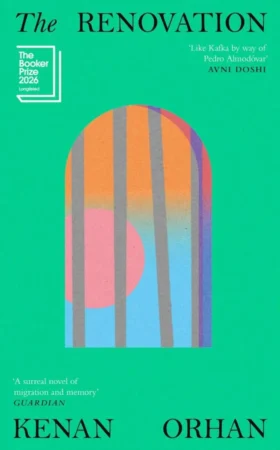
The Renovation
Kenan Orhan
In Italy Dilara, a Turkish woman commissions a bathroom renovation, the renovators lock her out and she doesn’t see any progress, when they’re finished and they leave Dilara discovers that instead of a bathroom she has a Turkish prison, complete with guards, inmates and the smell of a local coffee house seeping in. Her bathroom has literally become a portal to the Silivri Prison on the outskirts of Istanbul.
This is characterised as a magical realist novel, but this is the sort of magical realism I like. Its a premise, and that’s it. Personally I would call this speculative fiction, in that, its done something weird and then the rest of the book is exploring the human consequences of it.
Dilara, her husband and father fled the Erdoğan government, after her father was labelled a political dissident, something that caused him to be attacked by thugs and Dilara to lose her job. I have to be honest, I knew Turkey had an authoritarian government and was criticised by a lot of Turkish authors I’ve read, but I didn’t actually know how bad it was. While this novel is quite simple in its depiction of Turkey, that simplicity cuts through a lot and shows us the magnitude of the government’s control and the fear it exerts over everyday folk. I didn’t realise Erdoğan was disappearing folk, torturing folk & committing crimes against humanity. I appreciate any book that teaches me something about the world.
I think the obvious theme that Orhan is exploring here is attachment and detachment from a people Dilara identifies with. In a sense exile is its own form of imprisonment. Dilara faces racism in Italy, she does not fit in, and even if her bathroom is a prison cell, she is drawn back to it, spending time inside it when she doesn’t need to, slowly creating connections with the women of the prison. She has freedom in Italy, she has a connection to the people in her bathroom.
What I loved about this novel is, we expect it to explore migration, fitting in, loss of identity and these kinds of themes; and I think Orhan explores them with insight, intelligence and emotional intelligence too. However, I didn’t expect this to also be a novel about caring for somebody with Alzheimer's disease and I can’t tell you how much I loved this. It feels like a completely disconnected theme, and it’s really not. Orhan is doing a lot of intelligent stuff with Dilara’s father’s Alzheimer’s disease. It's very metaphorical and there for a purpose and I’ll explain that soon, but this is a novel that takes the time to be emotionally connected with the characters. You really get Dilara’s frustration, stress, concern for her father, her fear, entire novels are written about illness and care giving. Entire novels fail to capture the complex and contradictory emotions of care givers, but this short novel that has plenty of other themes really does it a good service.
I did mention that the Alzheimer’s suffered by Dilara's father is doing metaphorical work too, at one point Orhan uses the phrase "entombed in the mental fortress of his illness", I think this is a great line and one that captures the parallels of imprisonment and jail. Dilara and her father are forced to flee Turkey, imprisoned in the world away from their homeland, they are also imprisoned by illness, the father by his failing memory and abilities and Dilara by her care giving duties. Everything comes back to imprisonment.
It is not just Dilara’s father’s memory that is failing, Dilara realises that her memories of her childhood in Turkey were inaccurate. Relatives were in photos at events she swore they were absent from, while others were absent, they looked different. The unreliability of memory is questioned almost from the off, when Dilara is trying to recall what she said to the contractors, what she might have done for them to install a Turkish prison into her bathroom.
When Dilara was young she thought her father was the inventor of language, not a word or phrase she heard outside of the house had she not already heard from him. As an adult 10 years after leaving Turkey, speaking Turkish makes her melancholic, while Italian makes her light and airy; but her father is losing his language, his humour is vanishing as his vocabulary shrinks, and Dilara’s longing for her father to return to his youth, to his health is expressed through her seeking out Turkish, her spending more time in the prison, around Turkish women, who speak Turkish. Similarly Dilara and her husband speak Italian to each other, not only representing their desire to assimilate into Italy, but a moving on in Dilara’s life, from a child where the most important person in her life spoke Turkish, to as an adult where he speaks Italian.
Dilara’s relationship with her husband is deeply flawed, at the beginning of the book we can see her husband is anxious, stressed, and Dilara’s reaction to discovering a prison in her bathroom is how do I hide this from him? What an absurd thought. Yet when he does learn of the bathroom he becomes convinced that it is proof that Turkey is still after them, that they’re not safe, his reaction to the prison in the bathroom is fear, not curiosity, and he moves out. As Dilara is exploring her Turkishness through this prison, her husband is running from it, their failing relationship becomes a metaphor for the separation between migrants and their past. There is no doubt that Dilara’s husband loves her, but he is also distant from her, Dilara might as well be Turkey.
Also, this is a novel about the people, particularly the women of a nation struggling against an authoritarian right wing government, and while this story is about imprisonment, containment and so on, it is also a very universally and politically relevant theme at the moment.
This was just an incredibly captivating read, wonderful character work, nice prose, but thematically it was such a balanced novel, very intelligent, but also very emotional, this is a really great novel and another potential winner.
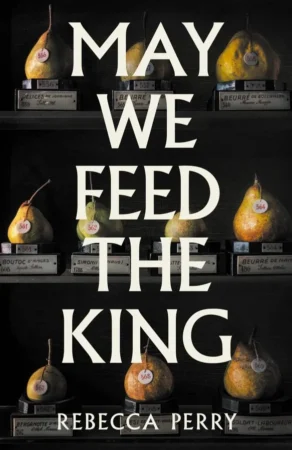
May We Feed the King
Rebecca Perry
This is a story within a story kind of book, our framing story, which may or may not be the main story depending on really I think your personal experience with the book, is about a curator at a museum who is getting a display ready. She meets an archivist who helps her gather information on the king she wishes to make the central point of the display. Then we get the story of the King, an unlikely king, a man who was 3rd in line to the throne, and never expected to be king, he is both an unlikely king and a reluctant king.
From a craft point of view, I am a big fan of Rebecca Perry’s prose, like our curator she lingers over small details. At one point the curator says she’s putting a needle and thread in the display, something she expects only 1 in 1000 people to appreciate, but it was enough that 1 in 1000 would, and I was wondering, Rebecca Perry, what are your 1 in 1000 lines you have included? While she was able to focus on details, she is very precise with her writing in other places, she is quite conscious of when to linger and when to push forward. This leads to an excellently crafted setting which our characters can interact with, giving us such a complete picture of who they are. This is a character and setting strong novel.
Initially I don’t think there’s an obvious connection between the two stories, but there is a connection between the characters. The Curator is isolated, lonely, sad, recovering from grief, and these are feelings we see repeated in the King, the central characters from both stories feel the same, is this because the Curator is trying to get into the head space of the King to make the display, asking to sleep at the museum in his display, or is she still suffering from an unknown grief, an event that takes place before the book begins. The source of the king's sadness is more obvious, he is resentful of the role he is forced to occupy, and I think this is a key reason we don’t get his name, he’s not King John or King Richard, he’s the King, his entire identity in the novel is a role he doesn’t wish to have.
The King is in a relationship with of all people, the Queen, except it is well known, even to our king that she has a lover. The relationship between the king and the queen is curious, rather than resenting her for cheating on him, the king just seems to accept it, at one point he does think how he longs to be the Queen’s lover, but it’s at odds with the rest of their relationship and we’re left to wonder, does he desire his wife, does he desire intimacy with anybody or does he wish to be the Queen’s love so that he is no longer king. The Queen actually becomes a close ally for the King and we never really know if they have marital relationships on the nights they share a bed, it is more important that they are seen to be having relationships, than if they actually are. I also find it interesting that the court cares more about if they’re having sex than if they are getting on and liking one another, after all, an heir is essential.
The King’s cousin's wife turns up one day, and ingratiates herself to the king. It is in the affair that they have that we start to reflect on the relationship between the curator and the archivist, there was definitely a friendship there, was there something more? How exactly does Rebecca Perry make me question that relationship by giving the king a lover?
Who rules a museum if not the curator, and who rules a kingdom if not the king? Yet, the king must fight with his advisors, men who try to make him mobilise his army, men who try to get him to produce an heir, men who wish to control him and treat him as a puppet. While the curator must justify her expenditure, a fake apple, a coat, why must she buy these things new when the museum already has them? It is a questioning of power and control.
While I have made it sound like the curator is taking on the king’s emotions, we must remember something, it is the curator telling the story, it is the curator interpreting the art and the records, maybe the curator sees something in this king that she wishes to tell the world, and maybe she is correct, or maybe her bias is coming out. This is such a simple question, that of bias and who is telling the story, but it is so central to literature, it is so complicated as every example is different, and when we are looking at the story of a king, at a curator telling that story, based on records, accounts, and so on, we have bias introduced at every level, and we have the question, should a story be retold in a way to try and remove the bias, or does that in itself introduce more bias. As the novel draws to a conclusion we come back into the framing story with the curator and she is at a Q & A with the public, and in a reversal she asks them, where do sources come from and what makes bias.
There is a reason we always come back to bias and who is telling the story, firstly, everything is told through bias and secondly, while I think most of you know that, I don’t think that most of the general public realise that or if they do, I don’t think they account for that. This modern relevance to this novel is maybe the reason we don’t know when the King’s story was based, it doesn’t matter if the king is Charles or Donald Trump or Elon Musk, it doesn’t matter if they’re Napoleon, Leif Ericson or Edward VIII. People who tell you stories about them are trying to make you think something about them, if you don’t understand that, how will you understand what really happened?
I really enjoyed this multilayered novel. It appeared quite simple, but it builds into something much more, it’s well written and I couldn’t help but like every major character, even with their flaws.
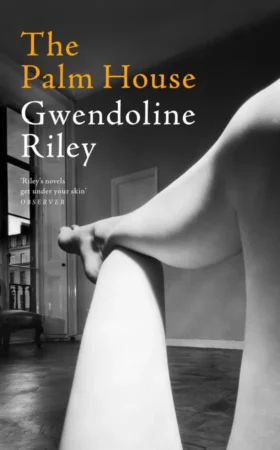
The Palm House
Gwendoline Riley
This is a novel intentionally light on plot, exploring the relationship between Laura Miller and Edmund Putnam. Laura has a difficult relationship with her mother and is close to 40, while Putnam is 10 years her senior and a magazine editor of Sequence, and who feels like slightly more of the protagonist to me.
Putnam’s job at Sequence is undergoing great change, a new owner Simon Halfpenny comes in with visions of making Sequence London’s version of the New Yorker. Now I’ve never read the New Yorker, so I don’t have an informed opinion on it, but a quick google tells me that it is a prestigious literary magazine, that is both praised and criticised, which I guess is typical of anything remotely literary, however it definitely seems like Edmund Putnam is one of those who agrees with the criticism more than the praise. We could be London’s New Yorker or we could be London’s Sequence.
As a criticism of capitalism within the literary landscape, I really liked this. after all any new author writing about women or relationships must be the new Sally Rooney, the French Sally Rooney, the Black Sally Rooney, the Japanese Sally Rooney, Ottessa Moshfegh mixed with Sally Rooney. I enjoy Rooney, but if I chained her in a room with an unlimited supply of amphetamines and forced her to write a book a week, I’d probably get bored of her. Literature doesn’t need another Sally Rooney, we already have one, and she’s great and I’ll read her next book, but literature needs somebody new with their own unique take on the world. Marketing however, marketing loves a Sally Rooney but she’s really tall, fat, likes table tennis, was a marine biologist. I feel like Putnam’s pushback on Halfpenny’s vision for sequence is a direct criticism of the uniformity that capitalism likes from art.
This makes Putnam feel like he’s not working on something he loves anymore, and questions the role of work in our lives. Should Putnam quit? Should he fight? But also, does he still belong there? How does the changing identity of his workplace fit with his own identity? Does Putnam feel like Halfpenny is destroying his own legacy? Was Sequence his way of being immortal, of living on.
Laura is much more emotionally distant than Putnam, that is despite Putnam being quite shut off. This is probably why I feel that Putnam is the protagonist, despite Laura being as or even more written about on the page than him. Laura is the one in control of the relationship, keeping Putnam close, without ever really truly letting him in. This in a way leads us into the other great question of the book, we assume that both Laura and Putnam are straight, single and attractive, yet, there is no hint at a relationship between the two of them, it is strictly a platonic friendship. I love seeing friendships between men and women written on the page, and yet the second I start reading about one, I start to question why they aren't getting naked. Is it because I’m so attuned to reading about relationships or because I think love and having a partner is more important than friendship, and Riley is definitely showing us the importance of friendship between these two characters.
I really enjoyed Riley’s last novel My Phantoms, which is also a relationship heavy novel, but this I think doesn’t quite have the same texture as that relationship. In a novel without much of a plot, with a very generic city based setting, it does leave us looking at the characters and wanting them to be exquisitely drawn and this relationship to really pull the book through and I think it falls short of that and in all honesty is a little forgettable. In addition, I loved the themes, but they’re not exactly great revelations, and unless something completely went over my head, I’d have liked something a little extra in there.
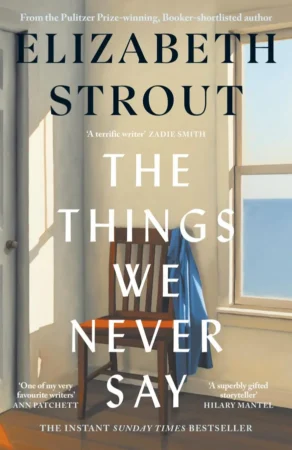
The Things We Never Say
Elizabeth Strout
So, I had a reaction to Elizabeth Strout being longlisted, here it is cue disappointed reaction from earlier video. In the comments of this video I had a lot of you saying this is Strout’s best work yet, and I’d have to say I agree with you, it was only a moderate struggle to finish this one.
The problem I have is Strout’s prose and her inability to trust a reader. She’s not taking chances with her style like Marlon James or Rebecca Perry, she’s not using the charisma of Luke Kennard and she’s not showing the reader what is happening like Emma Cline and trusting them to follow. She repeats herself, she will show you what is happening in one sentence, only to tell you afterwards. This is the formula used by Freida McFadden, by James Patterson, this is literature that doesn’t require you to think as you read, it’s sub-average escapist pulp fiction. It’s a fine beach read, but what is this doing on a prize list?
Right, now that I’ve been nice, let me take the gloves off. I don’t like her work, she’s a hack.
Artie Dam is a school teacher, who is teaching as an unnamed new president comes to power, who is so transparently Trump, I wonder why she didn’t name him. Artie tries to shape and educate the minds of those around him, despite the growing rise of populist opinions and the structural changes of the school.
The point of not naming somebody, such as Donald Trump, is to make us question if it is him, is it somebody else, is she attacking Trump or rising authoritarianism. Could this be based in the future? Or somewhere else? An alternative universe? This sort of ambiguity can add to a novel, force the readers to engage with something, but there is no ambiguity in this novel. We know Trump is the president in this book, just as we know what Strout is saying about him, at least she has the good sense to be critical of him. Is she not naming him because she’s worried he will sue her, or disappear her or make her life horrible? Is there a non book related reason for not naming him?
I’m not going to do a big thematic analysis of this book, I don’t think there’s a lot that isn’t obvious, it’s not a deep book and it’s not a book that rewards deep analysis. Trump is a terrible president, yes, that’s obvious, I just called him terrible too, but I didn’t waste 200 pages repeating myself, this is a writer who does so much less, with so much more than any I can think of, wafer thin characters, poor prose and clinical unsophisticated emotions.
Still, it was better than Lucy Barton, so there’s that.
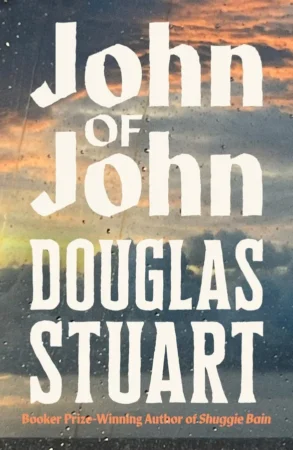
John of John
Douglas Stuart
If you are a regular viewer, you may have seen me review this novel long before the booker prize announced their longlist, so I think there’s little surprise in me saying, I loved this book, and I think it is a potential winner.
Set in a fictional remote corner of the Isle of Harris in Scotland’s outer Hebrides, John of John follows Cal, who goes by his middle name Callum, to avoid confusion with his father, John. Cal has just finished his university in Glasgow and returns home. Stuart paints their relationship in the opening scene, as an exhausted Cal prefers walking in the rain to catching a lift, ensuring he doesn’t get there sooner.
John is violent, controlling and religious and we think we know where this book is going, what it is doing - but, I think Stuart is really intelligent here, he’s not going to be a cliche, but he’s also going to deliver so much more than what is promised. Unsatisfied with a simple book, he elevates it.
Everybody except Cal and possibly Isla - thinks Cal will marry Isla, just like John married Grace. Isla is the daughter of neighbours the McDonalds, however, Cal is more interested in a different McDonald, Doll, Isla’s older brother, 6’6” and with a drinking problem, the McDonalds don’t just wish Cal would marry their daughter, but help get their son back on the right path.
John and Grace are separated now, Grace is living with John’s brother on the other side of the island; but strangely John still lives with Ella, his mother in law, a woman who never learnt Gaelic, and who John abuses in Gaelic everyday.
This entire novel feels like Cal’s sexuality is a don’t ask don’t tell situation, it seems certain that Ella, Isla and Doll all know his sexuality, and almost certainly a few more, but nobody acknowledges it. What I found much more interesting is John’s sexuality, and how it contradicts his deeply religious views. John’s religious views seem much more about fitting in, than they do about being pious, following god. We start to see in the title of the novel, John of John, not Cal of John, but John son of John, two characters who seem so different, but actually who are tough and stubborn, who are running. Cal has a choice, marry Isla, who despite her differences may as well be called Grace, and hence Cal would become his father, or he could be his own man.
John is running from the relationship he is in with another man, refusing to accept him, refusing to live with him openly, and he risks losing him. In a similar situation, Cal could have stayed in Glasgow, where there are other gay men, yet he is running back to a small town in the Hebrides, where the closest gay man might be miles away by ferry ride, something considerably longer in a pre-internet mid-90’s Hebridean setting.
There is so much more going on in the background too, Doll’s alcoholism, visiting men getting a woman on the island pregnant and leaving her, only for the men to travel together and have a word and determine which of the men is responsible. There is the question of language, and Ella being an outsider despite living most of her life on the island, certainly longer than Cal, probably longer than John. The isolation of island life and this insular community, a disappearing way of life and subsistence. They’re all explored excellently.
I love how Douglas Stuart uses Gaelic in with his prose, it doesn’t just build place and setting, but character. Stuart’s prose is emotional and lush, his plot is immersive and his characters make this novel work.
Stuart, like Marlon James has already won the Booker Prize, but unlike James and his novel The Disappearers, I think John of John is Stuart’s best novel yet. I am loving seeing the commercial success of this, authors like Stuart getting proper commercial success is what literature needs. So in a way I don’t want this book to win, because I think Stuart has finally cracked it, and there are other great books on this longlist that would benefit more and should also be celebrated… That said, this is such an all round amazing book, I would be very happy if it won and it would be a truly deserving winner.
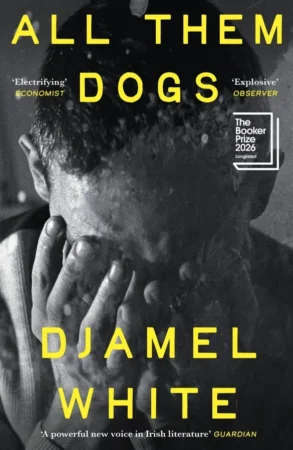
All Them Dogs
Djamel White
Tony Ward or Wardy returns to Dublin after 5 years hiding in England after murdering a rival gang member. On his return he meets up with Aengus Lavelle, a local crime boss, who introduces him to Flute, somebody Wardy knew in his childhood and a fellow enforcer for the gang.
Wardy’s return is met with a series of super masculine, macho violence and from reading other reviews I can tell you that there is meant to be a kindling romance between him and Flute, but I did tease you before by saying I DNFed one of the novels and this is it.
This was boring tough boys fighting bullshit, but now they have knives, guns and drugs, and the novel itself was so poorly balanced, that I couldn’t see any hint of affection between the characters. I assume what we’re meant to see is this struggle to show affection in the hyper violent world, but it’s either too subtle, or it takes too long to get going. I only got a third of the way in before I bailed, and it’s possible a lot more happened.
Violence in novels is like swearing, it’s fine, as somebody from one of the three fuck, cunt bollocks sweary nations that are Australia, Ireland and Scotland, we embrace that as part of our identity. Yet, if you say fuck every second word, it loses it’s impact, people of the world, value your fucks, there are people in this country who give their children a 3 fuck limit per week, just to teach the value of really meaning it when say it, being truly creative and impactful about it. Fuck is a special occasions word, it should only be used when you drop something really heavy on your toe, or to address your local politician. Saying fuck every 2nd word is as bad as never saying it at all, I’d go so far as to say they’re both a sign of low intelligence. Violence in books is the same, if it becomes normalised, it loses its impact on the reader, and it becomes monotonous and boring. Djamel White, needs to read somebody like Marlon James, to learn how you can be ultra violent, how you can create a world of unsafety and violence, without letting the reader get bored.
This is just too raw to be longlisted. It’s quite abysmal to be completely honest.
The Vivisectors
Missouri Williams
Set in a university town, Agathe, who is the daughter of somebody famous and doesn’t seem to need to work, works for a lecturer, who seems to be obsessed with Adam. Adam is a contrarian who has got himself in deep water, saying something against one of the lecturers, we never find out what Adam says, but he refuses to apologise for it.
I guess this is a novel about cancel and call out culture, which is all well and good, but is basically meaningless, without knowing the issues at hand here. There is a variety of lime here in Australia, that is quite wrinkly and has a name beginning with the letter K, a name that is the South African version of the N word. Trevor Noah does a stand up on it, because it sounds similar to Kefir, a fermented dairy drink. The name for the lime itself is South East Asian, and it is just a coincidence that they share a name. I’m trying to bring up a topic here that is easy to understand both sides of the concerns, but equally something you probably have never considered. A conversation about a student or lecturer using that name of the lime and whether they should and what is the appropriate level of backlash. It is easy to see how that can be explored from different points of view, it’s easy to see how 2 viewers could think differently on this and it’s easy to see people changing their minds when they hear the opposite side. Incorporating cancel and call out culture into this discussion would be appropriate and it would add to the conversation here. But to discuss cancel culture, without an example of cancel culture, that’s just stupid.
This entire novel is a campus fight about stuff I don’t care about, because I don’t know what’s happening. Rogue gardeners are refusing to garden, leaving the city to become overgrown. Again, something is being said about striking, unions and corporate power, a class divide but it’s very light on.
Agathe’s mother tries to kill herself and Agathe is expected to come and help her, she is angry at her parents and resents this time. She no longer lives with them, instead living with her uncle, but we don’t know why. Agathe’s later treatment of her mother makes no sense, it’s just heavy handed.
This entire novel is lacking in description and substance, and that’s as intentional as it is poorly executed. This is a novel laden with metaphors, without saying much, The Vivisectors references the characters of the novel, and how they cut each other apart without compassion or analysis, how they destroy without thought. Everybody is cruel and vicious and there is no counter point to this.
Politically benign with anaemic characters, the prose is overwritten and the entire novel lacks a combination of focus and substance. A novel that warns of conflating an author with her characters, an insurance Missouri Williams has taken twice, once by warning the readers and the other by failing to create meaningful characters.
I want to say this is a red hot mess, but the coals of the fire aren’t even still warm, it’s a stale mess. Reading this book is like cleaning up yesterday’s dog turd.
This is a writing exercise not a novel. Just because something is experimental, doesn’t make it good, usually experimental is shorthand for, stuffed up everything that’s good about the novel, and that’s what this book is. A book lacking in both style and substance.
That’s the 13 books, obviously some stinkers and some amazing books, with very few between. Just a quick note, I clearly didn’t enjoy 5 of the titles. If you did like them, I’m actually really jealous of you. I want every book I read to be an amazing experience, so if you got something I didn't get out of a book, you’re winning.
My longlist really writes itself, I have to include, Switzy, The Renovation, Black Bag and John of John. I thought May We Feed the King was excellent, and The Disappearers has to be included too. Maybe those two were slightly behind the other 4, but it’s a very clear and an incredibly strong top 6.
After that I would place The Palm House and The Shadow of an Object, I will call them inconsistent novels, with highs and lows, positives and negatives and the remaining 5 were utterly terrible and I’m unsure what justification was used to longlist them. I can only assume we have 2 or 3 quality judges and 2 judges simply trying to sabotage the prize.
Despite the up and down nature of this longlist, I would call it a success, I very much doubt I would have picked up Black Bag, while The Renovation, Switzy and May We Feed the King I am doubtful on too. I had already read John of John and had a hold on The Disappearers at my library before the longlist was announced, but that’s 4 amazing books I wouldn’t have read without reading this prize, and yeah, I had to read some crap too, but I’m always of the view you have to kiss a lot of frogs if you want a really good trip while you’re out in the jungle.
What do I think will win? Honestly, I’ll be happy if it’s any of the books on my shortlist. I think John of John is probably my favourite, although I have a great deal of love for Switzy - however, based on the other books I think both The Renovation and Black Bag are more to the judges tastes, and of those two, I think The Renovation is slightly stronger, so that’s what I think the judges will pick.