
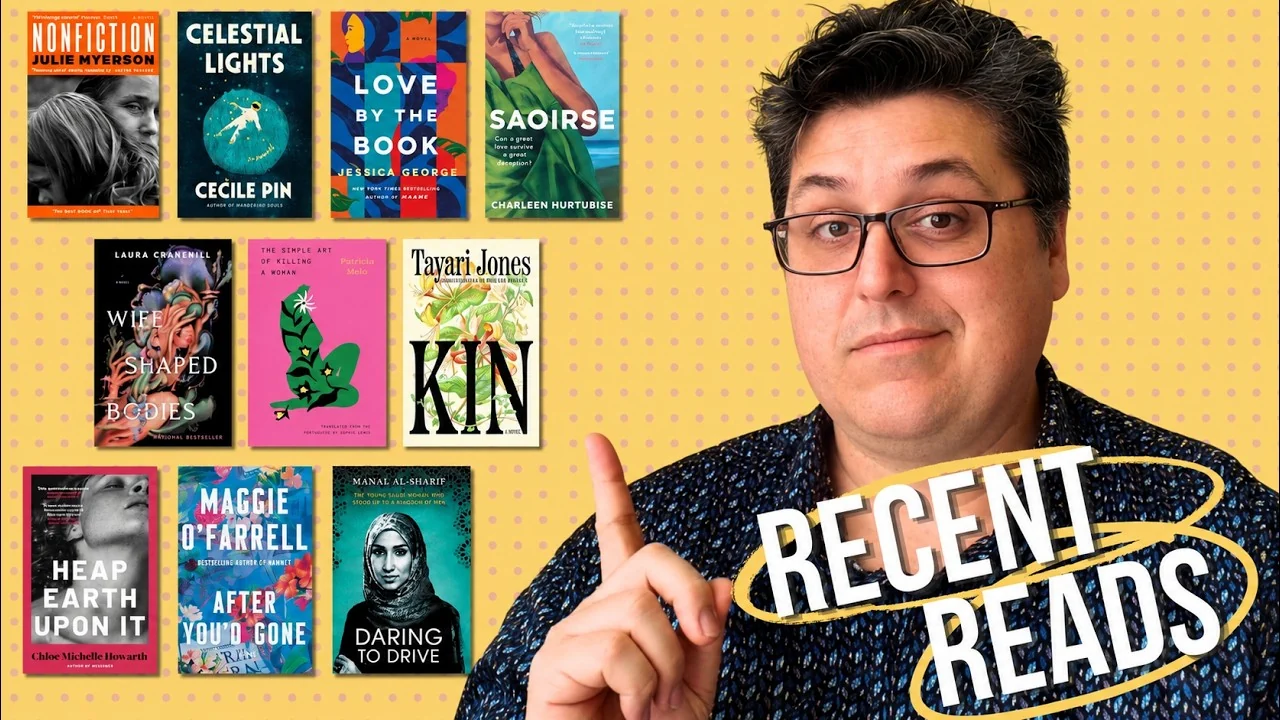

Watch Scott’s video on YouTube ↗
Hello and welcome to Gunpowder Fiction and Plot, my name is Scott and this is a channel where I use some overly erudite linguistic noise or language approximations to try and disguise the fact that most of the time I’m talking nonsense. I’m also going to review a bunch of books, because we all know people who read books are at least 15% more awesome than non-readers.
As usual I’m going to start by generally bullying the weakest and worst of the novels, and slowly work my way towards kissing that orifice of the best books that doesn’t see much sunlight.
And if you’re wondering what on earth I just said, you’re not the only one. I write these introductions months in advance in the knowledge that I’ll forget them and that future Scott will read whatever is on the screen, and editing Scott will be too lazy to cut any of this. I’m basically being hazed from a Scott who hasn’t yet been fleeced by a Nigerian prince and doesn’t realise this is a particularly sensitive time in my life. Scott you’re an arsehole.
But you dear viewer can make up for the fact that I have to live this life as me and become one of my patreons. Why would you want to do that I hear you ask? I have no idea, but these excellent folk are a lot more intelligent than I am and they seem to stick around. So there’s a 50-50 chance you’ll love it too.
I assume you’re actually here for the books and not whatever the opening two minutes were, but before you TBRs grow by 3 to 8 books, we need to discuss:
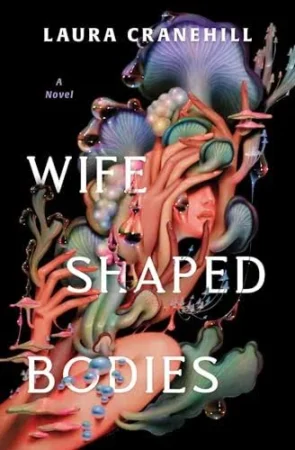
Wife Shaped Bodies
Laura Cranehill
This is a horror novel that is really more weird than it is anything else. Nicole is confined to her house until she is married, she is told that the mushrooms that cover her body and the bodies of the women in her community are horrible, repulsive and dangerous. Nicole marries Silas and things are very clearly not right, but how much does the insulated Nicole understand?
Now that she’s married Nicole is allowed out sometimes, and one day she meets another wife, who creates an electric feeling inside Nicole and pushes against the rules of the society where they live, leading to us discovering the secrets of the mushrooms.
This is a novel that does not realise the potential it could be writing about, let’s be fair, this is not horror, it is dystopian with some weird mushroomy stuff going on. Dystopian is a really cool genre, because it can be super literary, super political and super commercial at the same time. It is ultimately the genre I am most interested in and most disappointed by, because it can be everything in the hands of a quality author… There’s hinting at feminist themes and masculine control and queer women in this society too, but it’s not actually exploring anything about these things. It’s not political, it’s not literary and it’s not entertaining.
The plot is mundane, the characters ghostly, the setting confusing and ill described and the prose elementary.
I spent the entire time waiting for this book to start, waiting for the pieces to fall into place, and then it was over. The book was meant to be about oppressed mushroom women, I just found it oppressive.

Celestial Lights
Cecile Pin
I know, you probably didn’t expect to see this book so early in the video, but for an author who demonstrated so much talent in her first novel Wandering Souls, this is another example of second book syndrome, and a publishing world looking for short term sales and pushing an author to publish anything, rather than building a career and allowing authors to take the time, build a novel like they often do with their first book.
Oliver Innes is one of the world’s most renowned Astronauts, when he is asked to man a mission to Europa, a mission that will take 10 years, leaving his wife and child behind. Leaving his parents, one of whom has a terminal illness. How will the world change while he is away? But that is not really the question being asked, Pin is exploring the idea of ambition and family life. Statistically most viewers won’t harbour aspirations to be an Astronaut, but if you did, would you leave your partner and young child for 10 years? Of course Oliver Innes is offered greatness, no longer will people say Neil Armstrong, they will say Oliver Innes. Is that worth missing out on seeing your kid grow up? Is that worth sabotaging your relationship with your wife? Would you allow your partner to leave you for a decade to chase their dream?
These themes are all there, but they’re not explored with any depth. The mission has three members, but I only knew why one person was aboard the space flight. It is those missing perspectives that would have given us insight, what is different, what is the same, there is a richness missing from this novel, which could have been there with some different narratives to give us comparison and contrast.
Another aspect of this novel that was under explored, was that with 3 people on the space ship for 10 years, they’re going to develop relationships. I’m not saying it would be sexual or anything, but they co-exist as autonomous co-workers, there for a mission, there for work, to collect a cheque. This was either incredibly poorly executed, or Pin has completely misjudged something. Maybe the argument is that 3 people who would decide to do such a mission of isolation wouldn’t need or want human connection, but it’s really not an isolated mission, they’re living in close quarters with each other for 10 years.
This is a novel both lacking in depth and insight. Cecile Pin for her credit can write a sentence, and there are flashes of insight. The section where Ollie returned to earth and tried to rekindle his prior relationships and start life again was well written. His wife and her emotions and feelings of abandonment were captured well. There’s enough to remind us that she is an author of more than a little talent, but this felt either rushed or overly cut back to the point of butchering. The ambition of this book couldn’t be met with the number of words allowed to write it. The result is something rushed, tired and substandard.
Publishers, by all means, push your trash formula writers for a second book quickly, but encourage your authors of substance and talent to take the time they need to craft their novels. There’s no excuse for publishing a book this raw from an author this talented.
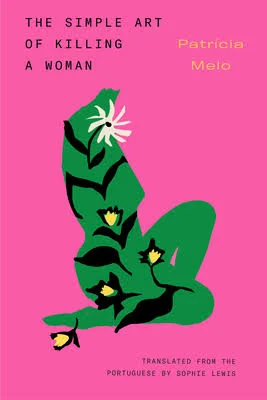
The Simple Art of Killing a Woman
Patrícia Melo
This is a novel that refuses to fit into a genre, it is a novel that is a magical realistic, crime, socially critical indigenous and feminist translated novel. Some of those things I love, some of those things I hate, and that’s probably why I would rate it as good but not great, because I think they’ve done all of those things well, but you know I hate Cauliflower, it’s disgusting, I don’t care how good your cheese sauce, or your aloo gobi spices or your vegan burrito recipes are, I’d still prefer to lick my own armpit after a particularly tough workout than eat it. But I know a lot of you love cauliflower and you’re probably thinking, can I deep fry my cauliflower cheese, use it to make aloo gobi and then put it in a burrito, and if you enjoy all of magical realism, crime, social criticism, indigenous, feminist translated literature, then you’ll love this book.
Also, broccoli, disgusting too. That’s just starved cauliflower in camo, basically it’s cauliflower if it was competing on Alone.
Sorry, this is a book review channel, not a vegetable review channel.
Apologies to all brassica enthusiasts out there. I’ll get back on topic.
This takes place in Cruzeiro do Sul, a small town on the border of Peru and Brazil in a state called Acre. Look, I don’t know very much about the history of Brazil, so one of the rabbit holes this book took me down is the history of this place and how it shapes its modern day politics and life in general. An indigenous community for over 2000 years, since the conquistadores they’ve spent more time as part of Peru and Bolivia than Brazil, but they tried to cede three times, between 1899 and 1903, before a conflict between Peru and Brazil ultimately led to Brazil gaining control. Not that they really have control, Melo argues that while Brazil owns and administers it on paper, the reality is that its remoteness to the east of Brazil where things are more industrialised, has led to what I guess we can call a Wild West style situation.
Acre also consistently ranks as one of the regions in Brazil with the highest rate of femicide. Violence against and the murder of women is significantly worse for indigenous women, indigenous people in general are far more often the victims of violent crimes in the area. Indigenous women have the double problem of if they are in an indigenous relationship they face increased risk of violence, but if they leave their communities they’re often the target of illegal miners, loggers and drug dealers, who often use violence against women as a tool of displacing indigenous populations, but who also view indigenous women as expendable. In The Simple Art of Killing a Woman we see women in all these situations, and the violence they face is inevitable.
That is a massive topic and a topic worth exploring more, however Melo is more interested in another important issue, the impunity of the perpetrators of this epidemic of violence. A young lawyer meets Carla, a local prosecutor and Marcos the son of a murdered woman, hoping to bring his mother’s killer to justice - but despite knowing who the killers are, justice is impossible to come by.
Love by the Book
Jessica George
Jessica George wrote Maame which I’m a big fan of, and this book is a little cozier, it’s a romance about friendship. I really enjoyed the perversion of the romance genre to make a point about the importance of friendship and the value we place on romantic relationships. Nonetheless, this novel is right on the cusp of what I will read and what I don’t enjoy reading.
Remy is an author whose debut novel about four friends is based on her own friendship circle, but she is struggling with writer’s block for her second story, what’s worse is that the three friends she wrote about are all moving in different directions, one is pregnant, one is moving to New York and one is getting back together with their horrible ex.
Struggling with friends, Remy bumps into Simone at a book signing. Simone is a teacher who lives a very luxurious life out of whack with her teaching salary. A secret that has torn her away from her religious family. Simone is a sex worker who was outed to her family when her sister’s new boyfriend recognises her.
As Simone slowly opens up about her family, Remy starts writing about it, getting things completely wrong, but using the information as inspiration and suddenly her writer’s block is cured.
Look, it's based on a romance, you can all fill in the plot, it’s not surprising, but the reactions and solutions are very human.
I enjoyed how George looked at the stigma around sex work, more than the sex work. A lot of the judgement around Simone’s side hustle is from Simone herself and her assumptions of what people will think. She assumes hostility in people, including Remy, who has a natural curiosity towards her work. Also explored are the financial realities of teaching and wanting a nice life and the financial benefit sex work can bring, but also the financial risk, as Simone relies on a small number of clients, what happens when she loses one and needs to replace them? What risks is she taking and how can she be financially exploited? It is not a particularly deep exploration and it’s not looking at the darkest side of that industry, but it is humanising the daily lives of the folk working in that industry.
Mental health is another massive theme, and again that is explored in a human first sense.
Ultimately, this is a novel looking at how friendships change and evolve, and Remy’s four drifting friends are massively part of that novel. How do you maintain friendships when your lives are moving in different directions?
I think Jessica George is a fantastic author and that she has executed the book she wanted here very well. Normally I love a book that is commercial and literary, but for my preferences, this didn’t have the balance right. I’m not the target audience, but I’m not so far removed from the target audience that I can’t see what she’s doing and appreciate that she’s done it well. I think this is a super safe novel for anybody who reads and enjoys both literary fiction and more importantly romance.
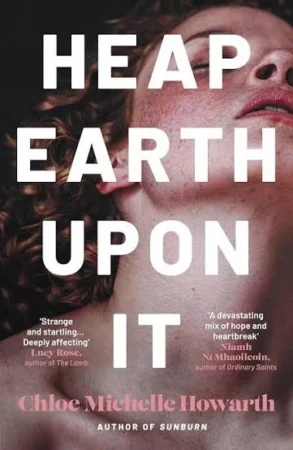
Heap Earth Upon It
Chloe Michelle Howarth
This is another author producing their second novel that was a little disappointing, not that this was a bad book, we’ve transitioned into good book territory for this video - but because Howarth’s first novel Sunburn was spectacular and led to some quite high expectations for her future work.
In 1965 the 4 O’Leary siblings Tom, Jack, Anne and Peggy arrive in Ballycrea on foot with only a few possessions and look to start again, burying the secrets of their past. They make friends with the Nevans, Bill and Betty, Bill offers the boys work, while Anne is offered friendship by Betty, and Peggy the only O’Leary who is still a child has a mother figure.
What unwinds is first a tale of masculine control, but it is Anne’s character that slowly goes from victim of Tom’s control, to a scary sapphic obsession for Betty. Is it a secret love story, or will Anne’s obsession lead to something dangerous?
Howarth is able to infuse what is a tale of a family starting again, a familial battle over who can do what, who works and who has what responsibility, and a crush, with some real gothic dread. You feel like every character is hiding something, every character could have a secret drawer full of the kidneys of the victims. While every character has their own agenda, every character is in some way repressed by the societal expectations where they live, not every character is up to no good, but every character is definitely hiding something. As we read on and figure out which secrets are going to come out and which will be buried, we ask, will the O’Leary’s have to move again and what does the future hold for these 6 characters.
Howarth is able to paint a repressed society very well, she is able to make the setting suffocating and isolating, but warm and welcoming. Her prose is exceptional, but I think the plot is a little too complex here, and there are too many characters. I feel like Anne was meant to be the focus character, but I don’t feel we got to know her quite enough, maybe the novel needed a few more pages to explore everything. This is definitely not a case of lack of talent, I’m still a big fan of Chloe Michelle Howarth and look forward to her 3rd novel - but maybe there was too much ambition, she was maybe trying to do a bit too much for this to work as well as Sunburn. If anybody hasn’t read Sunburn, please get it out, massive recommendations for that novel.
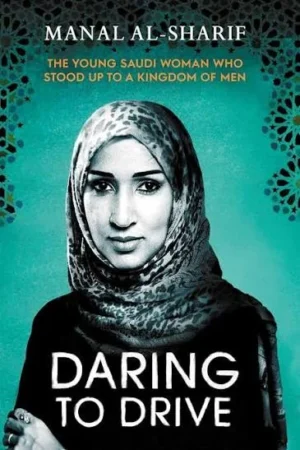
Daring to Drive
Manal al-Sharif
This is a memoir about a Saudi woman who protests the government's ban on women driving, by driving and posting about it on social media. A teen religious radical who shuns music because it was haram, who becomes a highly educated computer scientist working with a large US company in Saudi Arabia that has set up its own private suburb, where women were allowed to drive and some of the rules of Saudi society don’t apply… except where they did. Then becoming an activist jailed in an attempt to intimidate her and silence her.
I enjoyed al-Sharif's discussion around the men in her life and how they were in favour of her driving, because it meant they didn’t need to drive her. I love that this was at a selfish level, not an activist level, I found it very humanising of them. In general the depiction of the men in Saudi was very well done, and showed a large range of attitudes towards the rights of women. I thought al-Sharif’s brother was one of the best men in the memoir, a good guy, but definitely not perfect, while some of the men she was courting, dating, flirting with, considering, whatever you want to call it, were definitely very problematic.
I think it also says a lot about the society of Saudi Arabia, that in a book essentially about women driving and a feminist struggle, there are more men than women.
This is a book that really does what it says on the tin. I really enjoy learning about life in Saudi Arabia, that was so enlightening, and I enjoyed how al-Sharif was able to show her changes of opinions and values as she aged. The discussion around the situations and limitations placed on women, it really drew the cage of society very nicely, and that is without the jailing and intimidation this brave woman invited upon herself by so obviously breaking the law. I mean she tells people she’s going to drive and post about it online, then she does and her video goes viral. This was simple, but very well written, it was enlightening. I heartily recommend it.
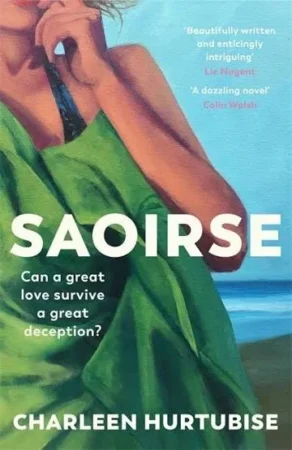
Saoirse
Charleen Hurtubise
1999 and 18 year old Sarah runs from a situation of fear and abuse in Michigan, on the run she is scared of both who she is running from and the law. She meets and befriends an Irish woman who is looking to stay in the US, presented with an opportunity she steals her passport and boards a plane to Ireland and assumes a new identity.
Saoirse as she is now known is lucky enough or unlucky enough to sit next to a young man Paul who is helpful and wealthy and soon ends up living with him and dating him. A situation she is not nearly grateful enough to be trapped in, powerless to leave. The victim of childhood abuse becomes so easily the victim of adult abuse. The way that she becomes dependent on Paul and trapped in an abusive relationship was really intelligently done, the way Saoirse acts you would think she’s too intelligent, independent and fierce to be trapped in such a relationship, but a series of choices where Saoirse has a bad and a worse option, but certainly no good options, and some bad luck and she’s stuck.
Saoirse also meets Paul’s friend Daithi, and while there’s an element of will they won’t they romance to this, it is very much complicated by Saoirse living with Paul and being his girl. It is definitely not a romance novel, Daithi is more a figure of hope to Saoirse.
This becomes gloriously messy over the course of several years, and the plot reaches a climax when the young Irish woman Saoirse stole a passport from returns to Ireland and triggering immigration concerns and the police wanting to interview Saoirse.
This is a novel about trauma and abuse, escape and freedom. Saoirse’s name means liberty or freedom - but it is a novel doing far more than that, it is a novel about damage and healing, about love and family and about identity. Who even is Saoirse? After running from America to Ireland, we can ask is Saoirse America or Irish? What does she think she is? She’s lived a life in both countries. Turns out she might be Canadian, a country she has no memory of visiting. Identity is such a funny thing, how much of it is about self determination? I can’t help but to think of how Saoirse got her name, some false rumours say it is the Irish version of Sarah, it is not, that’s Sorcha (SOR-ka), and Sarah/Saoirse picked her name, it was a joke that stuck.
Names are quite important in this novel, Daithi (Da-hee) means nimble, but similar to Saoirse and Sarah it is often mistaken as the Irish version of David and means beloved. Has the name been picked to mean beloved or not? Paul means small and humble, one might like to ask if it is a fitting name for him or not. Everybody’s name in some way suits them and in some way is completely off, and I can’t help but to see that as nature versus nurture.
I think this is a very strong novel, but why isn’t it a 5 star book? What is it missing? It’s quite fast paced and that’s just inappropriate for emotionally heavy novels. Saoirse's original trauma in the US was confusing to me, I was not sure for a lot of the book if I just missed something completely, or if we weren’t told, plotwise some facts needed to be kept back, but I think this could have been handled better, and I found some of the characters to be lacking a little bit of grey, I think slowing down the pace a little would allow for better character development.
The highlight was how trauma and abuse were handled, I never felt like Saoirse had a choice, I agreed with every move she made, and look where she ends up. I know that might sound a little victim blamy, almost like I’m saying it’s not her fault she’s not stupid - but for me to understand how a woman and a child ends up in such a horrible situations in the first place, that is to be critical of the society on both sides of the Atlantic, and that girl v woman, USA v Ireland, drugs v marriage, it adds so much depth to the conversation around exploitation and trauma.
Imperfect, but a very powerful read and to be honest, quite entertaining in places too.
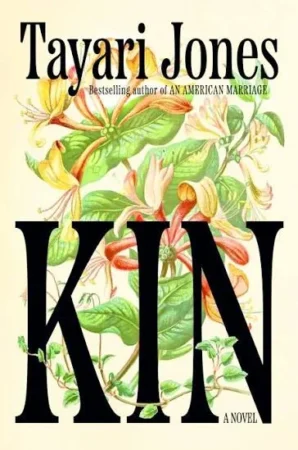
Kin
Tayari Jones
In 1950’s Honeysuckle Louisiana, Vernice and Annie, two motherless girls grow up as best friends - but as they grow up life has a way of pulling them in two very different directions.
Vernice or Niecy as she is known, grows up motherless after her father murders her mother before taking his own life, leaving Niecy to be raised by an aunty who fled Honeysuckle years before.
Annie was abandoned at birth by her mother and never knew her father. Raised by her grandmother Annie dreams of finding her mother, of being reunited and everything suddenly becoming better. There’s something understandable about a girl abandoned as a baby who craves understanding and acceptance from the woman who abandoned her - but this obsession begins to colour her life and sabotage her relationships… but considering some of her relationships maybe that’s not entirely a bad thing.
Vernice leaves for Atlanta and Spelman College where she meets powerful black women and one wealthy young man who she plans on marrying and he plans on marrying her - but she also meets somebody else, a charismatic young wayward woman. I enjoyed how Jones stayed away from labeling Vernice’s sexuality, and instead builds the relationships, because gay but passing, straight but experimenting or completely bi-sexual, these things don’t matter, they’re just labels, what matters is who Vernice likes, who makes her happy, who she wants to be with, and who she will actually be with.
Annie explores her sexuality in a different way, running away with 3 friends, 1 girl, 2 boys, on a road trip, only to break down near a brothel and have to beg for board. As Annie and Babydoll wash sheets, clean and make themselves useful in any way they can, the men they are travelling with are spending the money they make working in a different way. It is here working in a brothel that Annie discovers that women’s sexuality comes with a dangerous consequence, one men don’t have to deal with. One that has a brutal solution with a terrifying risk, but at least that risk isn’t becoming a mother who abandons her child.
These are the first steps into the world outside of Honeysuckle for both women and it’s hard not to see the fates of the two women as the best and worst case scenarios, but there is so much in common and different about these two women. Both women are at times paralysed with fear, but differently, both women crave love and acceptance, but differently, both women are completely isolated, but very differently, and both women stay best friends throughout this novel - because despite the exploration of abortion, sexuality and civil rights, before anything else this is a novel about friendship and belonging.
Annie ends up in a situation where she needs to ask Niecy for help, help Niecy doesn’t want to give her, help Niecy feel uncomfortable about it, help that pits past loyalty against current loyalties. Help that leaves both women asking, will she get caught while thinking of the other.
This is a very strong novel from Tayari Jones, and one that should be getting more praise right now than it is. However I think this is a case where the author’s name has done this novel a disservice, because this is a good book, but it’s not as good as An American Marriage, and where’s the shame in that? An American Marriage is a great novel, Kin has a lot of depth in it, a lot of issues, good characters, good plot, well discussed themes, nice prose and a great setting, it’s an all round good novel. I could probably list 100 books that are better than Kin, but they’re all exceptional, and Kin is a very high quality book, and if it were written by a debut author we’d be singing about their talent and saying I can’t wait to see what they write next - but this is just a good author who has written a good book, and it confirms our opinions of Jones, it doesn’t expand or contradict them
This would be a great book club novel, it’s got a lot of different themes to discuss and it has broad appeal so should please a lot of different readers.
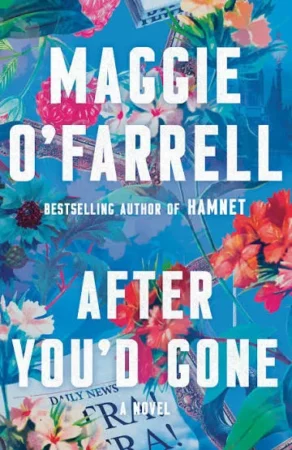
After You’d Gone
Maggie O’Farrell
This is the 2000 debut novel by Maggie O’Farrell, she is an author I am catching up on the backlist of, because I think she’s wonderful.
Living in London Alice catches a train back to Scotland, says hi and immediately catches a train back to London, much to the confusion of her family, she did seem out of sorts. Later that day she is in an accident and ends up in a coma. What was it that Alice saw at the train station in Glasgow that caused her to run and return to London so instantly? Why did she suddenly step out into traffic?
O’Farrell then scatters the timelines in the novel, jumping about to suit the characters and the story, but I always admire O’Farrell’s ability to do this without confusing readers in the slightest. We know where in time the story is at any given point, and I can’t really tell you how, it’s just voice, prose, rhythm and clarity. It is the things that make Maggie O’Farrell such a talented author, she is prose-perfect and she clearly didn’t learn it writing books, clearly it’s a talent she has always possessed.
As we learn Alice’s history, Mario her first abusive boyfriend, but then John and the idyllic love story that is the two of them, we wonder, where is John, why if she is so happy in this relationship did she step into traffic and we know, John’s not here, but where is he? It is the title, and I’d love to say it’s the mystery that runs through the centre of the novel, but we know what the answer is, we fear it, we want it to be untrue, and we know as it is approaching with progressively more certainty that it will happen, but we allow ourself to hope, and it’s crushing. Such is the attachment O’Farrell creates between her reader and her protagonist, we do not want Alice to suffer, even if we’re in the past, even if we know she’s tried to kill herself.
This is a novel exploring love, family, grief and all the things that make up a life. In some ways this is what a super commercial almost chick-lit novel is, when it is written by a literary author of considerable talent. This book is actually a perfect example of why categories like commercial fiction and literary fiction are nonsense. This is a case where great writing helps make great characters, and the characters and prose make the plot, and the plot, the prose and the characters give the themes depth. None of that makes it commercial or literary, it makes it well executed.
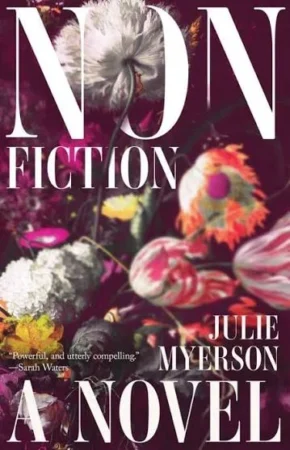
Nonfiction
Julie Myerson
Three generations of women, all with a troubled relationship with each other, told from the point of view of the middle woman, the mother.
Obviously this is a novel about mother daughter relationships, but it is also a story about drug addiction and how to deal with or not deal with a child that is an addict.
One thing I didn’t know when I was reading this is that Myerson’s own son is a drug addict and she wrote about it in a national paper. I mean, that piece of knowledge gives you a fair hint as to why she’s picked the title of Nonfiction.
I don’t like judging without all the knowledge of what was going on, but I’m not immediately a fan of Myerson’s actions in real life towards her son. In this novel however I was able to really gain the insight of the mother, her actions weren’t as calculated as a newspaper report retelling the events made out. She is in unknown territory and is guessing how to react to certain situations, she has made a threat, what if she doesn’t stick to it, what if she does and what is her responsibility now that her daughter is an adult? I really felt her struggle to know what to do, I also felt her struggle between, I want what’s best for my kid and I also want my own life, I want to be a person.
When our protagonist meets an old flame who begins flirting with her, we understand the desire is not about the sex or about leaving her husband, who is probably the only character in the novel that could be called likable. This affair, cheating, flirtation, whatever you want to call it, is about having something for herself, being able to run away from her life as it is.
The grandmother of the piece is the easiest character to hate, she is completely unlikable, it is interesting that our protagonist has some if not a lot of empathy for her daughter, who is horrible to her, albeit, clearly because of her drug addiction, while for her mother, the grandmother of the novel, she has none. The critics and advice, scorn and judgement, are met with defensiveness and ridicule, a little part of me chuckled thinking of my siblings as they’re given parenting advice from my parents. Grand-parents don’t want to accept that all children are different, while parents don’t want to accept that grand-parents have done it all before… except in this case, nobody has raised an addict before.
The relationship between the two older women feels so different to the relationship between the two younger, but they’re actually alarmingly similar, both are completely broken. This is what I think is the real genius of the novel, the relationship between the older women is not there as a comparison, but as a critic, the grandmother is completely surplus to the story and plot, she exists only as a frame of reference. Myerson has so clearly placed herself as the central character, the protagonist of the novel, and then taken away her own insight as an author, our narrator is completely biased, her mother is judgemental, controlling and petty, her daughter is manipulative in a completely different way, she’s exploitive, she’s also judgemental, controlling and petty, so is our narrator, but she never feels her own judgment or control, as you read the book, she’s clearly acting that way, maybe it’s all in the best interest of her daughter, it’s all about trying to get her clean, but of course, she knows her own motivation, and she’s not trying to empathise with her mother’s.
Myerson is able to build unlikable characters that I cared for, how does an author do that? That’s an absolute triumph. I’m also a big fan of her prose. This was a novel packed full of emotions, yet so much more is happening. This is a novel doing a lot of literary stuff, but all that adds to the surface level of enjoyment, this for me is the sort of novel literary fiction authors don’t try to write enough. I was hanging on every word.
Thank you so much for watching, don’t forget to like and subscribe. Bye bye.